
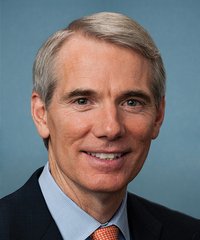
Rob Portman is a United States Senator from the state of Ohio, a position he has held since he was first elected in 2010, running a campaign that focused on common-sense conservative ideas to help create jobs and get the deficit under control. Rob won with a margin of 57 to 39 percent, winning 82 of Ohio’s 88 counties. In 2016, he was re-elected, winning by an even larger margin of 58 to 37 percent and winning 84 out of Ohio’s 88 counties.
The health care delivery system in Ohio is broken. With skyrocketing costs well above inflation, too many Ohio families and businesses are struggling to pay for health care, and over a million Ohioans have no insurance coverage at all. When uninsured Ohioans do access the system, it is often through the emergency room, bypassing the primary care they need and shifting the substantial costs to others.
Unfortunately, the health care law rammed through Congress in 2010 does not address the basic cost and access challenges Ohio faces. In fact, the law leads to higher health care costs, large tax increases, and many Ohioans losing the coverage of their choice. It also limits choices on doctors and medical treatment options.
That`s why I believe we ought to repeal and replace it with proposals that actually reduce costs and increase competition. Such proposals include eliminating the barriers to allow small businesses, associations, and other organizations to band together and offer health insurance at lower costs, increasing competition by allowing companies to sell health insurance across the state lines, and reducing the mounting cost of defensive medicine by enacting sensible legal reforms and better health information to stop the frivolous lawsuits.
Senator Ron Wyden and I led a bipartisan effort to make the Medicare Secondary Payer (MSP) Program more efficient and cost effective to taxpayers. The Strengthening Medicare and Repaying Taxpayers (SMART) Act speeds up the rate by which Medicare and its beneficiaries are reimbursed for costs that should be borne by another party. With Washington’s sky high debt and deficit, we need to do everything we can to ensure that entitlement programs such as Medicare are cost effective and working for the very people they were designed to help.
Under the MSP program, if a Medicare beneficiary is injured by a third party and a settlement is pursued as a result of that injury, the third party is responsible for paying for the individual’s medical expenses. If Medicare, now the “secondary payer,” pays any of the costs associated with the injury, it is entitled to reimbursement.
Several problems existed with the reimbursement process under this scenario before passage of the SMART Act. Prior to passage of the SMART Act, Medicare did not have a way to disclose the MSP amount before settlement, and this created unnecessary uncertainty that made it hard to settle cases. Second, there were times when Medicare spent more money pursuing an MSP payment than they actually ended up receiving in payment. MSP reporting requirements also required beneficiaries to submit sensitive personal information to the settlement company, which led to privacy concerns. Finally, there was no clear statute of limitations on all MSP claims.
The SMART Act addressed these issues by creating a process that allows CMS to disclose the MSP amount before settlement so it can be factored into the settlement; requiring Medicare to no longer pursue MSP claims that do not cover their own expenses; directing Medicare to establish an alternative method of identifying individuals so that they don’t have to provide sensitive personal information; and setting a three-year statute of limitations for most claims.
My top priority in the U.S. Senate is to promote policies that help create and foster an environment that leads to job creation and economic growth.
Too often, our government seems to do just the opposite. Rather than unleash the private sector, encouraging Ohioans to innovate and invest in new technologies and workers, government is instead saddling businesses with higher taxes, more burdensome regulations, and legislation we can't afford. While I will support and promote legislation to help Ohio small businesses succeed, I will also work to stop job-killing legislation that would make it harder for small businesses and entrepreneurs to grow.
I have traveled to every corner of our state, and everywhere I go I meet Ohioans who are frustrated by the lack of focus on jobs by their elected officials and who are looking for a new direction and real leadership to help Ohio's economy grow. My office will focus like a laser on jobs and Ohio's economy, rolling up our sleeves and working alongside regional chambers, economic development groups and businesses to bring jobs to Ohio.
As Ohio families struggle to live within their means, the federal government is on a spending spree, piling up new deficits onto our massive debt. The current deficit levels are unsustainable and create uncertainty in the economy that deters the investment and risk taking that encourages economic growth.
Washington's fiscal irresponsibility passes the problem to future generations, mortgaging the future of Ohio's children and grandchildren. Serious steps are necessary to get our fiscal house in order.
We face difficult choices and we must work together to develop the right balance between our short-term interests and our long-term fiscal health. In my view this balance must result in a balanced federal budget. As tempting as it might be to sacrifice the long-term economic stability for short-term political gain, it is not the responsible choice. I understand that reducing deficits through pro-growth policies and keeping federal spending under control are the cornerstones of fiscal responsibility.
The following charts reveal the challenges America faces from runaway spending and debt. These charts – which are based on a “current-policy budget baseline” that assumes current tax and spending policies continue – emphasize the importance of reforming entitlements to rein in budget deficits and ensure they’re secure for today’s seniors and future generations.
America needs a comprehensive national energy plan that reduces our dependence on foreign oil and ensures we have access to reliable, affordable and cleaner domestic energy. Ohio can play a key role in that plan by recognizing and harnessing the power of Ohio's natural resources - including natural gas, coal, solar, wind, hydro, nuclear, oil, and bio-mass - and matching them with our skilled workforce, advanced technologies, and strong research and manufacturing capabilities in a way that creates more jobs and opportunities for Ohio. We should also put increased emphasis on energy efficiency and conservation, key components of a new energy policy where Ohio can also play an important role.
Instead of taking unilateral steps that will make Ohio less competitive, as Washington is proposing, we should support technological advances and incentives that will lead us to next-generation sources of cleaner, domestic energy, while adding jobs.
We should aggressively pursue domestic energy sources, support the advancement of alternative/advanced energy technologies, and promote energy efficiency and conservation. Ohio stands to gain jobs from a combination of these approaches. More Ohio jobs will be created directly in the energy industry by unleashing Ohio's private sector to produce more affordable, reliable energy from proven sources, including natural gas, coal and oil, but also renewable fuels and sources of energy.
A new push for domestic energy and conservation can also directly benefit Ohio manufacturers and Ohio workers, many of whom make products for gas and oil production, the nuclear power industry, wind and solar power generation, clean coal processes, and the implementation of effective energy efficiencies, such as insulation, lighting, HVAC, and appliance refits, for homes and commercial buildings. Finally, Ohio will benefit as a center for energy research.
Rather than stifle the ingenuity of American enterprise and our market system through government interference and burdensome regulation, we need an energy policy that develops all domestic forms of fuel and energy, fosters renewed investment in research, development and infrastructure, and encourages conservation and efficiency.
My top priority in the U.S. Senate has been to promote policies that will help create jobs and economic growth. This led me to draft a specific jobs plan for Senate Republicans, which includes seven common sense steps to create the right environment for job growth.
One of the elements of the jobs plan is a new national energy plan to find more U.S. sources of energy to alleviate our dependence on foreign oil. But we can also lessen that dependence by using less.
That is why I introduced the Energy Savings and Industrial Competitiveness (ESIC) Act with Senator Shaheen (D-NH).
The bill will make our economy more productive and create jobs by incentivizing the use of energy efficiency technologies in the residential, commercial, and industrial sectors of our economy. Existing efficiency initiatives have already saved taxpayers more than $300 billion in energy bills and have reduced national energy use substantially. Our bipartisan bill takes efficiency to the next level through a variety of low-cost tools to encourage the use of efficiency technologies that will reduce costs for businesses and consumers, while making America more energy independent.
We believe this legislation will increase both our economic competitiveness and our energy security, while stimulating the economy and encouraging private sector job creation.
The Bill has passed the Senate Energy and Natural Resources Committee by a vote of 19-3.
Read more about the Energy Savings and Industrial Competitiveness Act.
I believe that America has a right to defend itself and that Congress has a tremendous responsibility to provide for our national defense. I have and will continue to promote policies and legislation that will provide our military with the capabilities they need to protect America’s values here and abroad. I will continue to serve as a steward of the American taxpayer – ensuring that the leaders of our Armed Services appropriately and effectively utilize your tax dollars to retain the right military capabilities and appropriately invest in the future force. America faces serious diplomatic and military challenges in the years ahead. As threats to our nation arise around the globe, there will need to be, in the words of President Eisenhower, “a speeding, a sharpening, a concentration that will extract the last cent of value from every dollar spent.”
Economic development has always been a top priority for me throughout my time in public service. Just as I was as a member of Congress, I have been directly involved in Ohio economic development as a U.S. Senator. My staff and I work closely with chambers of commerce, businesses, farmers, and economic development groups in every region of our state. We are working with them to attract businesses and investment to Ohio so that they can harness our second-to-none workforce, and we serve as a resource to help companies cut through the red tape of the federal bureaucracy.
Along with working to stop burdensome, job-killing regulations and legislation, I am also going outside the traditional role for a Senate office, getting directly involved with those who are considering moving their businesses to or expanding their operations in our state.
I helped facilitate an expansion announcement of PAS Technologies in Hillsboro, Ohio that is expected to create at least 40 and up to 200 new jobs. Through working with PAS Technologies CEO Phil Milazzo and state and local officials, my team and I helped convince the company to bring the jobs came to Ohio instead of other states.
We also introduced and successfully passed an amendment involving guardrails that saved hundreds of jobs at Gregory Industries, a fifth-generation family owned business in Canton, Ohio. An appropriations bill that funded transportation included language that would have mandated that states only use one specific type of guardrail that was galvanized in one particular way. This restrictive mandate would have prevented the majority of Gregory Industries’ guardrails from being used on federal infrastructure projects.
We are also advocating for Ohio’s regional economic development interests. We were successful in inserting an amendment into the FAA Reauthorization bill that increased Southwest Ohio’s chances of becoming a test site for safely integrating Unmanned Aircraft Systems (UAS) into the National Airspace System. For Southern Ohio, we helped obtain a federal designation of Adams and Scioto Counties as High Intensity Drug Trafficking Areas (HIDTA), a measure that will help the area combat the growing prescription drug problem. We successfully fought to help save hundreds of jobs in Northwest Ohio by blocking the potential closure of the Joint Systems Manufacturing Center, known as the "Lima Tank Plant." This effort also saved taxpayers between $800 million and $1.6 billion by not temporarily mothballing the facility and losing a skilled workforce and supply chain. In Northeast Ohio, along with saving jobs at Gregory Industries, we took the lead on the Great Lakes Short Sea Shipping Enhancement Act of 2011, which would benefit the Port of Cleveland by encouraging the shipment of goods through the Great Lakes and the St. Lawrence Seaway.
A staff member in my office works specifically on advancing regional economic development priorities, so please be in touch with any suggestions or ideas on how to help create more private sector jobs in Ohio or on specific areas where our office could be helpful.
Recognizing that raising premiums and cutting benefits aren’t the only ways to deal with the growing cost of Medicare, U.S. Senators Rob Portman (R-Ohio) and Ron Wyden (D-Ore.) introduced legislation that experts say could save Medicare billions by helping seniors get and stay healthy.
The Medicare “Better Health Rewards” program is a 100% voluntary program designed to help Medicare beneficiaries get and stay healthy by giving participating seniors achievable goals, a plan to reach them and incentives to keep motivated. It is the first proposal to offer financial rewards for reaching health care goals. Those rewards will be paid entirely by savings generated by seniors getting healthy and using less health care services. In other words, participating seniors who save Medicare money will be given an opportunity to share in the savings.
Medicare Better Health Rewards is a three-year wellness program that uses the annual wellness visit Medicare already pays for to ascertain and measure improvements in six key areas of health: tobacco usage, body mass index, diabetes indicators, blood pressure, cholesterol and up-to-date vaccinations and screenings. These areas have been identified as leading predictors of future health challenges.
In the first year, Medicare beneficiaries who choose to participate in the program will be assessed in each of these areas and then work with their doctor to develop a plan to bring their indicators into a healthier range. The senior’s progress will be measured during subsequent wellness visits in years two and three of the program. At those visits progress will be recognized for achieving and maintaining their targets in each of the key indicators. As added motivation to stick with the program, seniors earning 20 or more points will be eligible for a “Better Health Reward” paid for by the program’s savings.
Under the program, the Centers for Medicare and Medicaid Services (CMS) will calculate savings by deducting the actual cost of seniors enrolled in the program from the total projected costs of those participating absent the program.
The Ohio Department of Health (ODH) is backing U.S. Sen. Rob Portman’s (R-Ohio) recently introduced Medicare Better Health Rewards Bill due to its proactive, unique approach of improving the health of Medicare beneficiaries. The legislation would develop a 100% voluntary program to help Medicare beneficiaries get and stay healthy by giving participants achievable goals, a plan to reach them and incentives to keep motivated.
“The Medicare Better Health Rewards Program … is a unique program that will be one of the first to reward patients, in this case Medicare beneficiaries, for playing an active role in improving and maintaining their health,” said ODH Director Theodore Wymyslo in a letter to Portman. “Under this model, everyone wins … I am very proud of the success that this type of program has achieved at the Cleveland Clinic and am excited that your legislation proposes to expand this idea nationwide.”
Senator Portman has a long record of working to combat the drug epidemic.
In 1996, as a Member of the House of Representatives, Portman founded the Coalition for a Drug-Free Cincinnati, now called PreventionFIRST!, a community anti-drug coalition. He wrote federal laws like the Drug-Free Workforce Act and the Drug-Free Communities Act, which has brought more than $1.3 billion to community anti-drug coalitions across the country and $40 million to Ohio. He is the author of the Second Chance Act, which provides drug treatment for those behind bars in order to break the cycle of addiction, crime, and incarceration. It has brought more than $19 million of funding to Ohio over the last nine years.
Senator Portman also wrote the ID Meds Act, a federal law that set a national standard for states to exchange information from prescription drug monitoring programs and gave states like Ohio a new tool in the fight against prescription drug abuse.
Senator Portman authored the Comprehensive Addiction and Recovery Act, or CARA, the first comprehensive reform of federal addiction policy in two decades. It authorizes $181 million annually in new federal investments in programs for those addicted to prescription drugs or heroin. It improves prevention efforts, increases access to treatment, and is the first federal law to support long-term recovery from addiction. Former President Obama signed it into law in July 2016. Senator Portman worked tireless to get this legislation signed into law, including giving 29 floor speeches in 2016. He is currently working to ensure a timely implementation of his legislation in order to get people back home the help they need. For more information on how you can apply for grants, go here.
This year, Senator Portman introduced the Synthetics Trafficking and Overdose Prevention Act, or the STOP Act, which would help stop synthetic heroin from crossing our borders. The legislation was recently endorsed by the Fraternal Order of Police.