About Us   Privacy Policy   Terms & Condition    BLOGS    Login
https://candifact.com/img/header-logo.webp
  • HOME
  • NATIONAL BILLS
  • CREDIBLE INFO
  • NATIONAL POLLS
  • Presidential Election
  • CIVICS
  • CONTACT
Republican (1854-present)

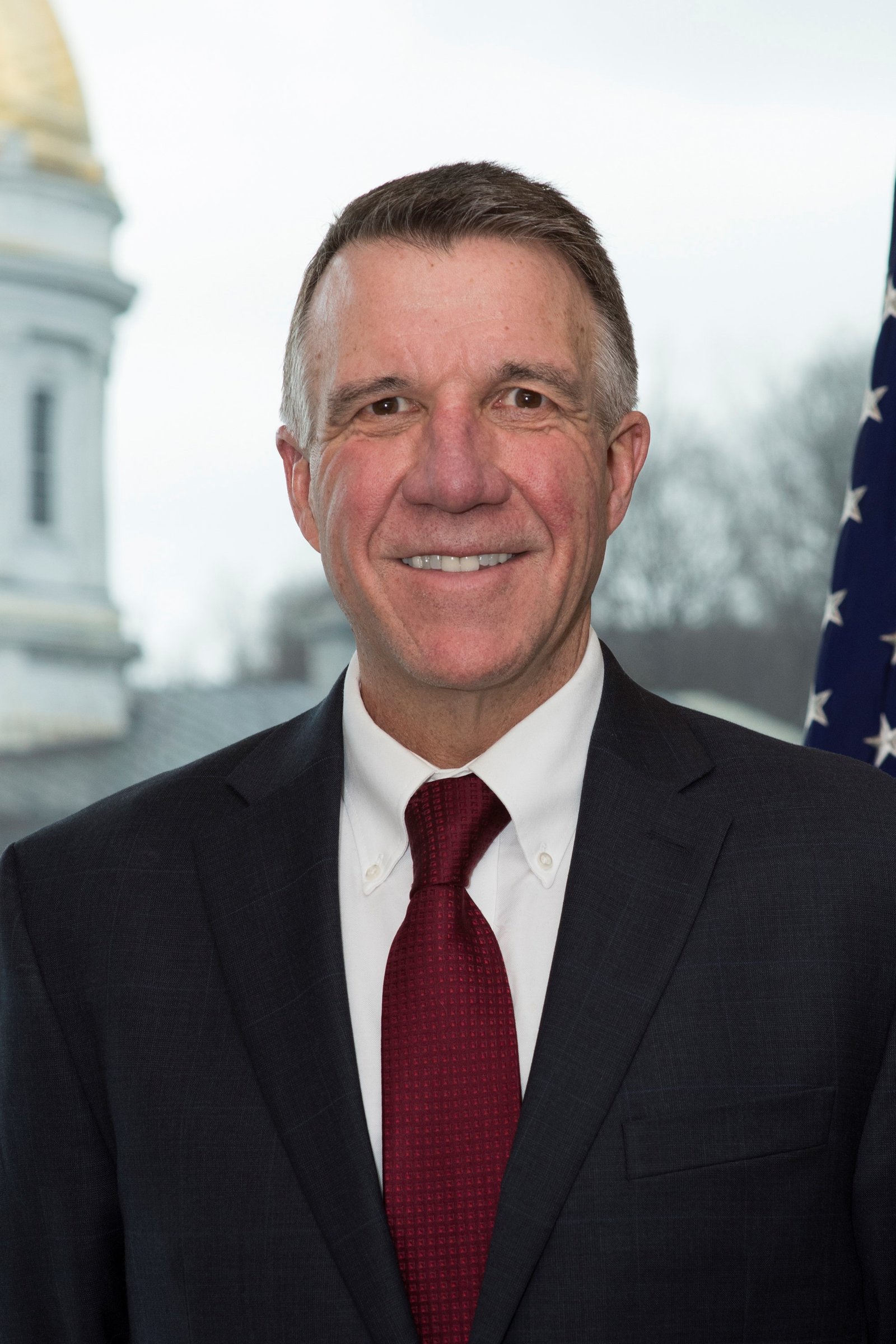
Phil Scott

Phil Scott became the 82nd Governor of Vermont in January 2017. Previously, he was elected and served three terms (2011-2017) as Vermont’s 79th Lieutenant Governor. Prior to that role, he was elected to the Vermont Senate for five terms, representing Washington County. During his 10-year service in the Senate, he was Vice Chair of the Transportation Committee and Chair of the Institutions Committee.

  • Overview
  • Platform
  • Research
  • Scorecard
  Nov--0001- Last update

ECONOMIC EXPANSION

Increased the Number of Tax Increment Financing (TIF) Districts

  • Tax Increment Financing (TIF) is a tool designed to stimulate private development, support public infrastructure investments, and benefit taxpayers. The Governor proposed and signed (Act 69 of 2017) legislation creating six new TIF districts throughout the state.

Expanded Downtown and Village Center Tax Credits

  • Proposed and passed a $200,000 increased investment in the Downtown and Village Center Tax Credit program, resulting in a total of $2.7 million in tax incentives for 22 projects in 11 counties across Vermont in FY18. These credits help improve infrastructure and to create new housing, retail and office space.

Supporting Small Business Development

  • Proposed and passed an increase in the number of small business advisors in Vermont, with priority for underserved counties, to provide small businesses greater access to resources and counsel, helping them thrive.
  • Proposed and passed the ThinkVermont Innovation initiative, which aims to accelerate small business growth by making funding available, leveraging federal programs, testing cutting edge broadband deployments, and assisting in the development of co-working and other non-traditional work environments.

Leveraging our Outdoor Recreation Assets for Economic Growth

  • Through Executive Order, created the Vermont Outdoor Recreation Economic Collaborative (VOREC), a task force to strengthen and expand Vermont's outdoor recreation economy and support overall economic growth. Acting on the Group’s first set of recommendations, the Scott Administration:
  • Proposed and passed the “Outdoor Recreation-Friendly Community” pilot program, to grow local outdoor recreation economies.
  • Launched a new camping gear loan program in state parks, giving more Vermonters access to Vermont’s camping facilities to expand interest in outdoor activities.
  • VOREC’s recommendations have also led to the creation of a private sector group, the Outdoor Business Alliance.

Strengthening Our Rural, Farm and Forestry Economies

  • To support lower workers’ compensation rates for employers, the Departments of Financial Regulation and Forest, Parks and Recreation directed the National Council on Compensation Insurance to combine the log hauling employer class with the contract trucking class, resulting in a 24% rate reduction for log haulers. This will result in significant cost savings for employers in this sector.
  • Proposed and passed a Sales and Use Tax exemption for logging and processing equipment and parts.
  • Proposed and passed clarification to existing law that dyed diesel is not subject to Vermont’s sales and use tax.
  • Proposed and passed a change to Act 250 permitting to allow sawmills under 3.5 million board feet to be processed as "minor" applications, making it easer for these businesses to responsibly operate. 
  • Proposed exempting recreational trails from Act 250 jurisdiction. The Legislature passed a directive to the Commission on Act 250 to evaluate regulation of trails and alternative structures for the planning, review, and construction of future trail networks and the extension of existing trail networks.
  • The Agency of Commerce and Community Development is working on recommendations for a program to designate parcels in rural areas as industrial parks for the purposes of providing regulatory and permitting incentives to businesses sited in the industrial park. 
  • Proposed and passed requirement for the Department of Public Service to report on the effect of electric utility demand charges on the ability of industrial enterprises to locate in rural towns.
  • Proposed and passed protections for forest operations from liability as a public or private nuisance.
  • Signed into law Act 77 of 2017, supporting an initiative from the Legislature that caps the air contaminant permit fee for emissions from anaerobic digesters at $1,000 and clarifies that phosphorus removal technology is eligible for assistance under Agency of Agriculture.

Supporting the Aviation and Aerospace Corridor

  • Proposed and passed legislation, Act 69 of 2017, to make permanent the airplane part sales tax exemption, supporting the aviation sector and strengthening the emerging Vermont-Quebec aerospace corridor.

Growing the Financial Services Sector

  • Changes in federal law mean many reinsurance businesses – previously ceded to offshore affiliates – will be returning to the U.S. Capitalizing on Vermont’s leadership in the captive insurance industry, the Administration and Legislature acted quickly to update Vermont law so the State could support these businesses, making Vermont a top destination for re-locating businesses in this sector.

Marketing Vermont as a Place to Live, Work and Visit

  • Proposed and passed an increased investment in marketing and implementing the Agency of Commerce and Community Development’s marketing plan, which emphasizes pitching Vermont as a place to live, work, and raise a family. This includes the launch of the ThinkVermont brand and website.
  •  

  Nov--0001- Last update

FISCAL DISCIPLINE & RESPONSIBLE TAX RELIEF

Strategic Budgeting & Lowering Costs of Government

  • Established a Growth Rate Calculation, a figure based on a six-year rolling average of wage growth, which serves as the base for budget growth rather than past practice of using forecasted revenue growth. 
  • For both FY18 and FY19, the Governor presented and passed balanced budgets that do not grow faster than Vermonters' growth in wages.
  • Reduced General Fund operating cost increases by $32.5 million, while improving the delivery of services.

Holding the Line on New Taxes & Fees

  • Did not sign a single bill that created or increased taxes or fees.
  • The FY18 State budget did not raise or add taxes or fees and held statewide property tax rates level for residential and non-residential rate payers.
  • The FY19 State budget did not raise or add taxes or fees and held statewide property tax rates level for residential rate payers for a second consecutive year.
    • The Governor vetoed two budgets in 2018 to prevent an increase to non-residential property tax rates, but under threat of a government shutdown, the budget became law without his signature. No Governor has fought harder to prevent unnecessary tax increases.  
  • Worked to implement a new approach to managing the State’s Education Fund, which – with the support and hard work of school boards across the state – helped Vermonters avoid about $71 million in forecasted property tax rate increases. Of those total savings, $29 million was a direct result of the Governor’s budget vetoes.

Elimination of the Tax on Social Security Benefits

  • Proposed and passed the elimination of the income tax on Social Security benefits for low and middle-income retirees, benefitting approximately 35,000 Vermonters.

Working Family Taxpayer Protection Act

Changes in federal tax laws at the end of 2017 impacted Vermont's tax system, so while many Vermonters will see lower federal rates due to this reform, these changes meant the State would have collected a net increase of $30 million in income tax, primarily from working families. To prevent this, the Governor proposed and passed a revenue-neutral plan to update our income tax laws, that did the following:

  • Lowered tax rates across the board by 0.2% for all filers;
  • Increased the Vermont Earned Income Tax Credit from 32% of the federal credit to 35% of the federal credit; 
  • Reintroduced personal exemptions at $4,000 each;
  • Created a Vermont-defined income deduction, equal to $6,000 for single filers, $12,000 for joint filers, and $9,000 for heads of household;
  • Introduced a 5% tax credit for charitable contributions (the as-passed bill includes a cap introduced by the Legislature); and
  • Moved to a system more closely tied to Adjusted Gross Income (AGI) to add resiliency and stability to the Vermont tax system;

This legislation, coupled with the exemption of social security benefits, reduced income tax rates and prevented the collection of a net $30 million in higher taxes on Vermonters.

  •  

  Nov--0001- Last update

ADDRESSING THE OPIOID EPIDEMIC

Improving Statewide Coordination

  • Created, by Executive Order, the Opioid Coordination Council (OCC), with a mission to strengthen and expand Vermont’s response to the opioid crisis through prevention, treatment, recovery and enforcement, while improving coordination across all state and local entities with a role in addressing the crisis.
  • Created the new position of Director of Drug Prevention Policy to align the delivery of services within state government, oversee the OCC and work with communities across Vermont to implement strategies.
  • Repurposed the Vermont Agency of Education’s Tobacco Use Prevention Coordinator position into a Substance Use Prevention Coordinator, allowing the State to address a wider range of prevention efforts in our schools.
  • Worked with the Attorney General to come to an agreement that assured at least $14 million from this year’s tobacco settlement went to addressing this crisis.

Expanding Substance Use Disorder Treatment Workforce

  • Coordinated a statewide substance use disorder workforce summit in April 2017, hosting more than 150 health, education and policy stakeholders to collaborate on solutions to substance abuse disorders, with a focus on increasing professionals in the treatment and recovery fields.
  • Working with the Secretary of State's Office of Professional Regulation (OPR), providers and industry stakeholders, reformed administrative rules governing licensed treatment professionals. These reforms increased the efficiency of the licensing process, allowing for expansion of this sector of the workforce.

Expanding Access to Treatment

  • Worked with partners and providers to expedite opening of the St Albans Hub (including opening of a temporary hub at Northwest Medical Center). These efforts supported the hard work of providers and treatment professionals across the state, helping bring the Chittenden County treatment wait list to zero, which created the capacity statewide to get people into treatment quickly.
  • Secured an amendment to Vermont’s Global Commitment to Health 1115 Demonstration waiver, allowing Medicaid to pay for inpatient residential treatment for addiction.
  • Expanded Medication Assisted Treatment to a 120-day continuation at all Department of Corrections sites.
  • After Maple Leaf Treatment Center in Underhill had to close its doors in February 2018, the Agency of Human Services partnered with Valley Vista and the Recovery House Network in Rutland to ensure there would not be a gap in inpatient treatment capacity.

Employment & Recovery

  • Launched a new initiative to have Vermont Department of Labor employment counselors make regular visits to all of Vermont’s recovery centers, providing services and guidance to help those in recovery find and keep jobs.

Protecting Children Impacted by the Crisis

  • Proposed and passed investment of $500,000 for a child protection initiative within DCF, which supports parent-child contact and will help reduce the backlog of court cases involving children affected by the opioid epidemic.
  • Proposed and passed increased investment in the guardian ad litem program, which supports children in the court system.

Working to Reduce Supply

  • The Vermont Drug Task Force, in partnership with federal and local law enforcement, has concluded multiple significant drug trafficking investigations involving illegal opioids and other narcotics, resulting in the arrest of over 200 individuals for narcotics violations. These investigations targeted Vermonters responsible for distributing narcotics, including heroin, and facilitating the distribution of illegal drugs by out-of-state suppliers. 
  • The Department of Public Safety has secured a $1.3 million Department of Justice Grant to combat heroin trafficking in Vermont. 
  • In partnership with the Drug Enforcement Administration and local law enforcement, promote and participate in “Drug Take Back” days, which aim to provide a safe, convenient and responsible means of disposing of prescription drugs, including unused opioids. In the last 18 months, nearly nine tons of unused prescriptions, including opioids, have been safely disposed of by Vermonters. 
  • Establishing prescription drug disposal sites at all ten Vermont State Police Barracks.
  •  

Candifact


https://candifact.com/img/footer-logo.webp

SITE MAP


HOME

NATIONAL BILLS

NATIONAL POLLS

BLOGS

CONTACT US

DONATE NOW

CONSTITUTION

DECLARATION OF INDEPENDENCE

BILL OF RIGHTS

HOW IT WORKS

Connect With Us


© 2026 Copyright : Candifact.com
About Us Privacy Policy Terms & Condition Share with Friends

Share With Friends