About Us   Privacy Policy   Terms & Condition    BLOGS    Login
https://candifact.com/img/header-logo.webp
  • HOME
  • NATIONAL BILLS
  • CREDIBLE INFO
  • NATIONAL POLLS
  • Presidential Election
  • CIVICS
  • CONTACT
Republican (1854-present)

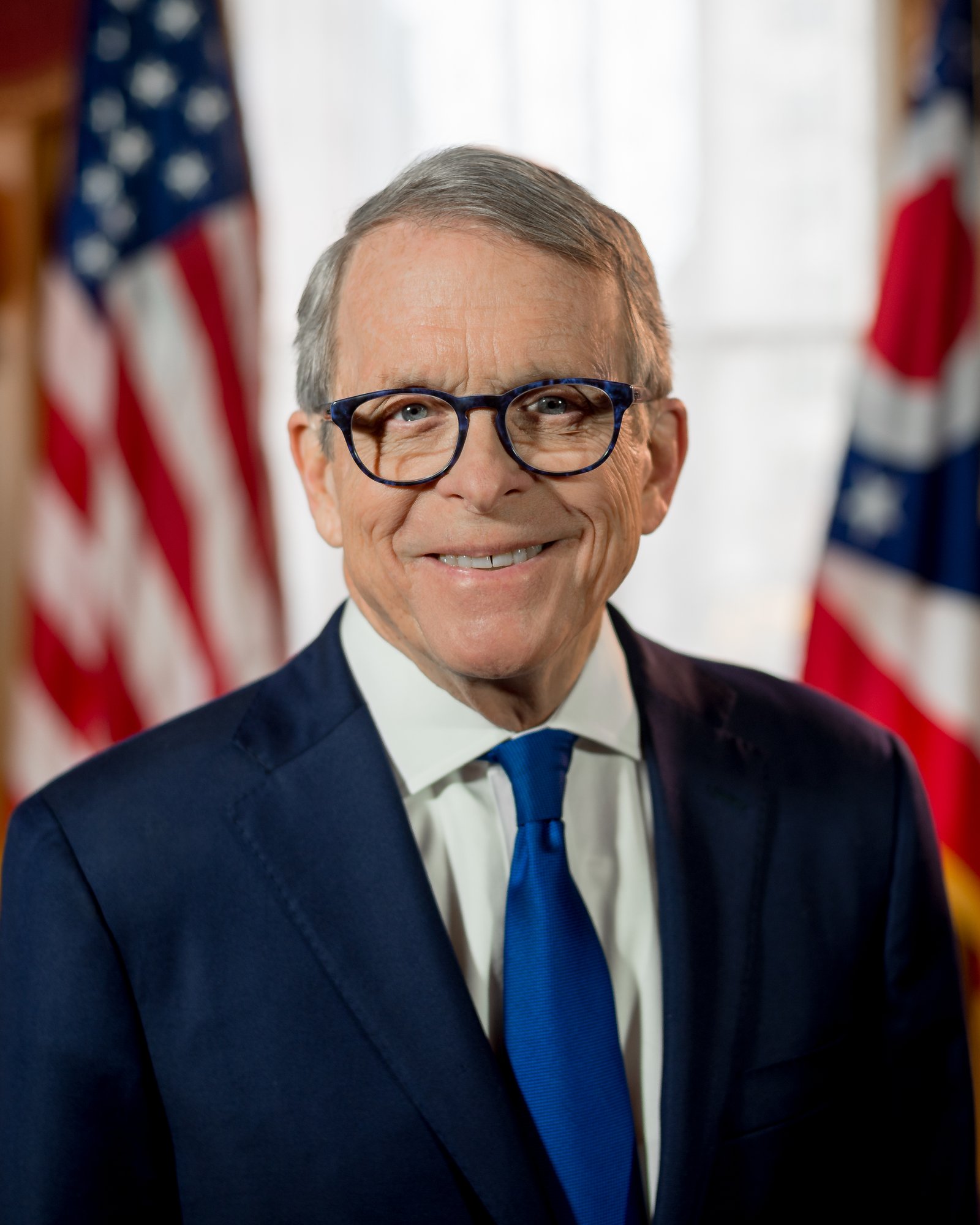
Mike DeWine

On November 6, 2018, Mike DeWine was elected to serve as the 70th Governor of the State of Ohio. Gov. DeWine has had a long and distinguished career in public service, focusing on protecting Ohio children and families. He was previously the 50th Attorney General of Ohio and has previously been elected to serve as Greene County Prosecutor, Ohio State Senator, U.S. Congressman, Ohio Lt. Governor, U.S. Senator.

  • Overview
  • Platform
  • Research
  • Scorecard
  Nov--0001- Last update

Human Trafficking

Human trafficking is a form of modern-day slavery where people profit from the control and exploitation of others.

  Nov--0001- Last update

Ohio Opioid Technology Challenge

Many individuals know a family member, friend, colleague or acquaintance who has been affected by the opioid epidemic. Ohio needs your help in identifying ideas and solutions, whether you’re a medical or healthcare expert or simply a concerned citizen scientist.

To learn more visit:  https://ninesights.ninesigma.com/web/ohio-opioid-challenge-p1/


Community Connectors

In 2014, Governor John R. Kasich and Ohio legislature designed the Community Connectors program to bring together students, their parents, schools, communities, faith-based groups and businesses in mentoring programs. The Community Connectors program seeks to strengthen communities, encourage mentoring opportunities and create new pathways for civic engagement that will result in higher educational achievement, higher levels of well-being and health and workforce readiness for our state. 

Picture

The Ohio Governor’s Office of Faith-Based and Community Initiatives in partnership with the Sagamore completed a multifaceted research study on the social service activities and financing of the state’s nonprofit organizations (NPOs) and houses of worship (HOWs). Titled the Comprehensive Mapping Project of Ohio's Faith-Based and Community Non-Profits, the initiative was based on the GOFBCI’s conviction that Ohio’s faith-based and nonprofit communities are enormous sources of social and fiscal benefit to the citizens of Ohio, yet they often remain underappreciated in terms of the practical value they generate— primarily due to the lack of research to quantify that impact. Since the GOFBCI is committed to promoting faith-based and nonprofit community policy and practice solutions—and specifically to supporting the development of local community collaborative efforts to solve problems—it commissioned this research to glean insight on how to amplify the nonprofit assets of the State and optimally identify and position the effective partnering role of good government.

logo

Another portion of the project is called Bright Ideas Ohio. Bright Ideas Ohio highlights promising practices by Ohio nonprofits to encourage peer-to-peer learning and innovation. Sagamore’s researchers interviewed veteran nonprofit consultants and trainers to get their input and also surveyed senior program officers at over 20 private grant-making foundations in Ohio to hear about their high performing grantees. Researchers also reviewed Ohio nonprofits that had earned various awards and recognition by media, government, academic, and research organizations. Sagamore staff then interviewed selected nonprofit leaders by telephone to gain detailed information about their effective programs and promising organizational practices.

  Nov--0001- Last update

Common Sense Initiative

Mary Taylor was sworn in as Ohio’s 65th Lieutenant Governor on January 10, 2011, the same day Governor John Kasich named her to lead Ohio’s Common Sense Initiative (CSI) to help create a more jobs-friendly regulatory climate in Ohio. CSI was established to create a regulatory framework that promotes economic development, is transparent and responsive to regulated businesses, makes compliance as easy as possible, and provides predictability for businesses. 

Comprehensive regulatory reform has helped revive Ohio’s economy and create jobs by generating a more jobs-friendly environment, but we still need your help. Please take a moment to give us your feedback. Your ideas are critical to the success of CSI Ohio and will help us identify specific areas where government hinders our business community’s ability to create jobs.

Click on “Share Your Solutions” to provide your thoughts on reforming onerous and burdensome red tape, rules and regulations. Also, “Sign Up” for routine updates on the progress of CSI Ohio. With your help, we can achieve the right balance of regulations that makes Ohio businesses competitive and protects the health and safety of Ohioans.

  Sep-2023- Last update

Budget

By working together, we've been able to create a better Ohio over the past six years: more than 450,000 new private-sector jobs, a balanced budget with more than $2 billion in reserves, lower taxes, common-sense regulations, record school funding and better roads. But, we can't rest on our laurels. We must do all we can to be prepared for the future. To continue Ohio's job creation momentum, the state's operating and transportation budgets for Fiscal Years 2018 and 2018 build on what we know works - focusing on areas critical to long lasting job growth and embracing the future and the emerging technologies that will create new job opportunities.

MAINTAINING FISCAL DISCIPLINE

The essential foundation of Ohio's economic turnaround and improved business climate is state government's fiscal stability. As a result, Governor John R. Kasich's budgets have been among the strongest in the nation, and world-class corporations and small business operators alike are realizing that Ohio's stable state finances make it a welcoming place to do business and to have that business succeed.


  • Preserving Ohio's Fiscal Stability: A climate of fiscal balance and stability continues to be the most important signal Ohio can send to job creators as they look to do business in a state that's on solid financial footing. This budget continues the Kasich tradition of conservative budgeting and restrained spending that has served Ohio well for the past six years.

STRENGTHENING OHIO'S JOBS-FRIENDLY BUSINESS CLIMATE

Ohioans have enjoyed one the biggest tax cuts in the nation over the past six years with more than $5 billion in tax relief. These tax cuts have helped spur our state's economic recovery and made Ohio one of the nation's top states for job creation. At the same time, Ohio has made regulatory reform a key priority within state government. Despite this progress, many elements of Ohio's tax system remain irrational and align poorly with today's consumer-driven economy. That is why this budget builds upon the Kasich Administration's previously enacted reforms.


  • Shrinking the Number of Tax Brackets: This budget reduces the number of state income tax brackets from nine to just seven, making Ohio's tax system simpler.
  • Simplifying Tax Filing for Businesses to Encourage More Economic Growth: Despite significant progress to address long-standing problems in Ohio's municipal tax structure, some aspects of the system remain too complex and costly as businesses are forced to comply with hundreds of different tax systems. Provisions in this budget streamline that process by giving businesses the option of filing just one form for their municipal taxes and make a single payment through the Ohio Business Gateway. The Ohio Department of Taxation will process those payments and distribute revenues back to the appropriate local government, just as it does for county sales taxes and school district income taxes.

HELPING OHIOANS BETTER PREPARE FOR CAREERS AND COLLEGE

Continual education and workforce training are crucial in today's economy if we are to help Ohioans be better prepared when technology forces profound changes for industries and their workforce needs.


  • Record Resources for K-12 Education: Gov. Kasich has again made K-12 education a priority by increasing base support to Ohio schools by more than $166 million. As a result, under the governor's leadership, Ohio will be spending $1.5 billion more for K-12 education than in 2011 - the strongest level ever at nearly $10.6 billion.
  • Awarding Degrees and Certificates Based on Competency Instead of Just Classroom Time: Ohio's community colleges recently partnered with Western Governors University to provide a flexible option for adult learners. The multi-state, online institution awards college credit and degrees based on a student's demonstrated knowledge instead of just the amount of time spent in the classroom. To build upon that relationship, Ohio will now formalize Western Governors University.
  • Offering Bachelor's Degrees at Community Colleges Where Demand Is Not Being Met: A new budget provision allows applied bachelor's degree programs to be offered through Ohio's community colleges in areas where Ohio's public and private universities do not offer specialized degree programs. This provides another low-cost pathway for students and strengthens Ohio's ability to meet workforce demands in the Knowledge Economy.
  • Strengthening Pathways to a Low-Cost Degree: The state's new budget encourages more agreements between community colleges and four-year universities to allow students to complete three years of their coursework at a community college and finish their degree at a four-year university.

TAKING OHIO TO WHERE IT NEEDS TO BE IN THE 21ST CENTURY BY EMBRACING TECHNOLOGY

Ohio state government has been working to stay ahead of the curve with advances in technology with innovative, forward-looking improvements in its programs and strategic investments in technologies that encourage economic growth. Gov. Kasich continues to build on that progress with a number of new or expanded initiatives.


  • Tackling Complex Problems through Data Analytics: By better connecting and correlating state government's data resources through applying advanced analytical technologies, the state can tackle complex problems - such as infant mortality and child welfare - with solutions that improve Ohioans' health, security and well-being.
  • Improving Cybersecurity: To ensure that Ohio's government, education and research infrastructure is protected against outside cybersecurity threats, Ohio will create a "cyber range" - a virtual environment used for cybersecurity training and IT infrastructure testing. At the same time, Ohio will work with the business community to develop a program to increase the number of students who pursue certificates or degrees in cybersecurity.
  • Using Innovation and New Technologies to Improve Transportation for Those Seeking Health Services: Ohio will modernize its existing non-emergency medical transportation system for Ohioans seeking medical treatment.

SUPPORTING OUR MOST VULNERABLE OHIOANS

The new state budget continues to prioritize necessary support for Ohio's most vulnerable, including the mentally ill, drug addicted and developmentally disabled.


  • Better Choices for Ohioans with Developmental Disabilities: The last budget invested a historic $286 million in additional dollars in Ohio's developmental disabilities system, and this budget includes an additional $65 million that will continue the Kasich Administration's push to provide more opportunities for individuals with developmental disabilities to receive care in the community.
  • Strengthening Ohio's Fight Against Drug Abuse: Ohio invests nearly $1 billion each year to help fight drug abuse and addiction. The new budget maintains this strong funding commitment in order to provide continued access to health care for many Ohioans struggling with addiction, plus other necessary treatment and recovery supports.
  • Supporting Mental Health Services: The new budget maintains the Kasich Administration's strong commitment to support Ohioans with mental health needs, including the continued integration of Ohio's behavioral and physical health systems, support for children in crisis and mental health hospital bed capacity.

GETTING A JUMP ON THE FUTURE OF TRANSPORTATION

The Kasich Administration is committed to embracing the future of transportation with new investments and forward-looking policies to ensure that Ohio maintains its leadership role within the automotive and aviation industries in order to benefit from the business investments and jobs that follow. Highlights of the state transportation budget for FYs 2018 and 2019 - passed earlier this year - include:


  • Continuing Ohio's Record-Breaking Pace for Highway Repairs and Improvement: Over the past seven years, at the same time many states have fallen behind in repairs and improvements to highway infrastructure, Ohio has invested an unprecedented $14 billion on nearly 7,000 projects - an increase of $3 billion. The state's new transportation budget continues that progress by investing in 43 major projects, 446 bridge projects, 615 pavement projects and 356 safety projects over the next two years.
  • Creating Smart Highways as Testing Corridors for New Transportation Technologies: Ohio will create and instrument two additional smart highway projects - on the Interstate 270 beltway in Columbus and Interstate 90 in northeast Ohio for innovators to test and refine jobs creating technologies. These will complement the state's other research corridors on a stretch of U.S. Route 33 in central Ohio and the Ohio Turnpike.
  • Investing in the Transportation Research Center, America's Foremost Independent Automotive Proving Ground: Funding in the transportation budget, together with commitments from other partners, invests $45 million for expanded research capabilities at the independent Transportation Research Center in East Liberty - the continent's most advanced independent automotive test facility and an ideal environment for autonomous vehicle and smart highway research.
  • Developing the Nation's First "Sense and Avoid" Test Site for Drones: Ohio is working with the U.S. Air Force Research Laboratory to develop a ground-based "sense-and avoid-system" for unmanned aircraft and has already invested in a $5 million cooperative effort. The state remains committed to advancing work underway at the Ohio Unmanned Aircraft System Center and Text Complex in Springfield for further research that gives Ohio a major advantage as drones become the basis for new industries and economic growth.

BOTTOM LINE: By maintaining Ohio's fiscal strength through conservative budgeting and smart management, we can continue to provide job creators with a stable environment for growth. At the same time, embracing innovation and the jobs of tomorrow will keep Ohio economically competitive and at least one step ahead of others with emerging technologies that can help us reap the benefits and jobs that follow.

  Nov--0001- Last update

Blueprint for Stronger Health Insurance Markets

As Congress considers reforms to strengthen our nation's health insurance system, we ask you to take immediate steps to make coverage more stable and affordable. The current state of our individual market is unsustainable and we can all agree this is a problem that needs to be fixed. Governors have already made restoring stability and affordability in this market a priority, and we look forward to partnering with you in this effort.

Most Americans currently have access to a stable source of health insurance coverage through their employer, or from public programs, like Medicare and Medicaid. While rising costs are a concern throughout the system, the volatility of the individual market is the most immediate concern, threatening coverage for 22 million Americans.

Continuing uncertainty about the direction of federal policy is driving up premiums, eliminating competition, and leaving consumers with fewer choices. Proposed premiums for the most popular exchange plans are expected to increase 18 percent in 2018 and 2.5 million residents in 1,400 counties will have only one carrier available to them on the exchange. Despite these headwinds, states continue to try to stabilize the individual market and have developed innovative solutions to preserve coverage while making insurance more affordable.

Previously, we have written that changes to our health insurance system should be based on a set of guiding principles that include improving affordability and restoring stability to insurance markets. Reforms should not shift costs to states or fail to provide the necessary resources to ensure that the working poor or those suffering from mental illness, chronic illness or addiction can get the care they need.

Based on these guiding principles, we recommend (1) immediate federal action to stabilize markets, (2) responsible reforms that preserve recent coverage gains and control costs, and (3) an active federal/state partnership that is based on innovation and a shared commitment to improve overall health system performance. Just as these proposals have brought together governors from across the political spectrum, we are confident they can attract support across party lines in both chambers of Congress.

  1. Immediate federal action to stabilize markets.

    Congress should continue its work to identify reforms that strengthen insurance markets in the long term, but we need immediate action to ensure consumers have affordable options in the short term. Insurers have until the end of September to make final decisions about participating in the marketplaces. Congress and the Administration need to send a strong signal now that the individual market will remain viable this year, next year, and into the future.

    Fund cost sharing reduction payments. The Trump Administration should commit to making cost sharing reduction (CSR) payments. The National Association of Insurance Commissioners (NAIC), National Governors Association, and United States Chamber of Commerce have identified this as an urgent necessity. The Congressional Budget Office (CBO) estimates not making these payments would drive up premiums 20-25 percent and increase the federal deficit $194 billion over ten years.

    Also, Congress should put to rest any uncertainty about the future of CSR payments by explicitly appropriating federal funding for these payments at least through 2019. This guarantee would protect the assistance working Americans need to afford their insurance, give carriers the confidence they need to stay in the market, increase competition, and create more options for consumers. Because the cost of this initiative is already included in the budget baseline, the appropriation would not have budget consequences.

    Create a temporary stability fund. Congress should create a fund that states can use to create reinsurance programs or similar efforts that reduce premiums and limit losses for providing coverage. The House and Senate each recently proposed $15 billion annually for states to address coverage and access disruption in the marketplace with a goal of lowering premiums and saving money on premium subsidies. We recommend funding the program for at least two years and fully offsetting the cost so it does not add to the deficit.

    Offer choices in underserved counties. Congress should foster competition and choice in counties where consumers lack options because there is only one carrier on the exchange. We ask Congress to encourage insurance companies to enter underserved counties by exempting these insurers from the federal health insurance tax on their exchange plans in those counties. We also ask Congress to allow residents in underserved counties to buy into the Federal Employee Benefit Program, giving residents in rural counties access to the same health care as federal workers. While these proposals may be temporary solutions, they will help provide Americans with additional choices until other policies have improved the market dynamics.

    Keep the individual mandate for now. Finally, to prevent a rapid exit of additional carriers from the marketplace, Congress should leave the individual mandate in place until it can devise a credible replacement. The current mandate is unpopular, but for the time being it is perhaps the most important incentive for healthy people to enroll in coverage. Until Congress comes up with a better solution – or states request waivers to implement a workable alternative – the individual mandate is necessary to keep markets stable in the short term.
     
  2. Responsible reforms that preserve coverage gains and control costs.

    Federal action to stabilize markets is only the first step. Governors have been eager to pursue reforms that strengthen health insurance markets in our states, but uncertainty about the ACA and the status of federal subsidies to support the individual market have made it difficult to proceed. Working alongside states, the federal government must make reforms that will preserve and expand gains in coverage, while controlling costs for consumers.

    In efforts to augment the potential federal actions we recommend in this letter, we attach a menu of options that individual states may consider or pursue. The options can be considered alone or assembled into a comprehensive strategy to achieve the interrelated goals of maximizing market participation, promoting appropriate enrollment, stabilizing risk pools, and reducing cost through coverage redesign. Different states will take different approaches. We all agree on and support the proposals contained in this letter, but each state will choose the state-based approaches that best fits their individual situation.

    Maximize market participation. Approximately 22 million people now purchase coverage through the individual market, but another 27 million remain uninsured. Increasing coverage uptake among the uninsured would improve the risk pool and set in place a virtuous cycle of lower premiums leading to higher enrollment.

    First and foremost, encouraging younger, healthier people to enroll in insurance and educating Americans about the importance of coverage can help improve the risk pool. The federal government should continue to fund outreach and enrollment efforts that encourage Americans to sign up for insurance. Many states invest in similar efforts, and all states need the federal government's support to maximize participation from younger, healthier people.

    Also, making insurance more affordable is a key part of increasing participation in the marketplace. For example, current law includes a glitch that makes some families who can't afford insurance through their employer ineligible for tax credits on the exchange. Congress should fix the “family glitch” and give more working families access to affordable coverage.

    Promote appropriate enrollment. Some consumers choose to enroll in a plan only when they need health care, stop paying premiums at the end of the year, or purchase exchange plans even though they are eligible for Medicare and Medicaid – all of which drives up costs in the individual market. Congress and individual states can reverse this effect, for example by shortening grace periods for non-payment of premiums, verifying special enrollment period qualifications, and limiting exchange enrollment for those who are eligible for other programs.

    Stabilize risk pools. The ACA created several risk sharing programs to help effectively manage the risk of the individual insurance market. However, the federal government has gone back on its commitment to these programs, in some cases refusing to fully fund risk sharing programs. Congress should modify and strengthen federal risk sharing mechanisms, including risk adjustments and reinsurance. This commitment to federal risk sharing will augment the state efforts that are supported by the stability fund.

    Reduce cost through coverage redesign. States have an important but limited role in selecting essential health benefits (EHB). The Secretary of Health and Human Services (HHS) should allow states more flexibility in choosing reference plans for the ten EHB categories than are currently allowed by regulation. HHS should give states that develop alternatives to EHBs that meet the requirements of Section 1332 of the ACA the opportunity to pursue and implement innovative approaches.
     
  3. An active federal/state partnership.

    States can pursue many reforms without federal assistance. However, in some cases states are constrained by federal law and regulation from being truly innovative. We urge Congress and federal agencies to work with states to overcome these constraints, focusing first on improving the regulatory environment, supporting state innovation waivers, and controlling costs through payment innovation.

    Improve the regulatory environment. The ACA created a greater role for the federal government in state health insurance markets, but retained states as the principle regulators of those markets. Recognizing the need for some common federal standards, the federal government should not duplicate efforts or preempt state authority to regulate consumer services, insurance products, market conduct, financial requirements for carriers, and carrier and broker licensing in states that already effectively perform these functions. Also, federal agencies should review the list of regulatory reforms identified by NAIC to stabilize markets.

    Support state innovation waivers. Section 1332 of the ACA permits a state to request permission to waive specific provisions of the ACA, including the individual and employer mandates, as well as requirements for qualified health plans, essential health benefits, tax credits and subsidies, and exchanges. A state may not waive community rating requirements, prohibitions on preexisting condition exclusions, lifetime maximum coverage limits, preventive care mandates, or coverage for adults as dependents through age 26. To obtain a waiver, a state must demonstrate its plan would not increase the federal deficit, would not reduce the number of people with health coverage, and would not reduce the affordability or comprehensiveness of coverage.

    Many states view Section 1332 as an opportunity to strengthen health insurance markets while retaining the basic protections of the ACA. We recommend HHS streamline and coordinate the waiver submission and approval process, including an option for states to easily build on approved waivers in other states, and an option to fast-track waiver extensions. We also recommend HHS rescind its 2015 guidance on Section 1332 and clarify that states may combine waivers into a comprehensive plan and measure deficit neutrality across the life of the waiver and across federal programs.

    Control cost through payment innovation. Coverage is important, and coverage reforms can help contain costs, but eventually our nation needs to confront the underlying market dynamics that are driving unsustainable increases in the cost of care. With the support of the federal government, states are resetting the basic rules of health care competition to pay providers based on the quality, not the quantity of care they give patients. This is true in our states, where we are increasing access to comprehensive primary care and reducing the incentive to overuse unnecessary services within high cost episodes of care.

    Congress and the Administration should make a clear commitment to value-based health care purchasing. For example, Medicare and other federal programs should be allowed to participate in multi-payer State Innovation Models. The Administration should align priorities for value-based purchasing across all federal agencies, including HHS, CMS, SAMHSA, CDC, VA, AHRQ, HUD, DOL, OMB and others. Payment innovation projects should be funded through the Centers for Medicare and Medicaid Innovation and expanded to more states.

    Empowering consumers with information about the cost and quality of care can help to drive competition that will lower costs. New tools should be developed to provide consumers with better information about how much health services cost or which providers offer the best quality of care. For example, the federal government should work with states to promote consumer-facing websites and apps that let consumers shop for health care based on quality and cost. Many states have developed all payer claims databases to provide greater transparency for consumers, and should be allowed to include claims information from federally regulated ERISA plans in these databases.

    We strongly encourage that Congress and the Administration take immediate action to stabilize the individual health insurance marketplace. If there is a clear signal to consumers and carriers that the individual market is viable, then additional state-based reforms will be more manageable and we can succeed in preserving recent coverage gains and controlling costs. As we move beyond the immediate crisis, the real challenge over time will be to confront the underlying cost drivers of health care spending, and reset incentives to reward better care for individuals, better health for populations, and lower cost.

    Lasting solutions will need support from both sides of the aisle, and we applaud the bipartisan efforts that have now commenced in both the House and Senate. We ask that you support these efforts to return to regular order, allowing committees to work in an open, transparent and bipartisan manner. Governors have extensive expertise implementing changes to our health insurance system, and we stand ready to work with you and your colleagues to develop solutions that are fiscally sound and provide quality, affordable coverage for our most vulnerable citizens.

  Nov--0001- Last update

Children's Initiative

The Governor's Children's Initiative is tasked with leading Governor DeWine's efforts on home visiting, quality child care, children's mental and physical health, and the foster care system.

  Nov--0001- Last update

RecoveryOhio

Moments after taking the oath of office, Governor DeWine created the RecoveryOhio initiative to ensure that we act aggressively to address this crisis and invest in the health and well-being of Ohio’s citizens.

  Nov--0001- Last update

Faith-Based And Community Initiatives

The mission of the Governor’s Office of Faith-Based and Community Initiatives is to promote solutions, including those from faith-based partners, to community needs and support the development of collaborative efforts to improve the well-being of all Ohioans.

  Nov--0001- Last update

InnovateOhio

InnovateOhio’s mission is to look at every state service with an eye on the customer’s experience.

Candifact


https://candifact.com/img/footer-logo.webp

SITE MAP


HOME

NATIONAL BILLS

NATIONAL POLLS

BLOGS

CONTACT US

DONATE NOW

CONSTITUTION

DECLARATION OF INDEPENDENCE

BILL OF RIGHTS

HOW IT WORKS

Connect With Us


© 2025 Copyright : Candifact.com
About Us Privacy Policy Terms & Condition Share with Friends

Share With Friends