
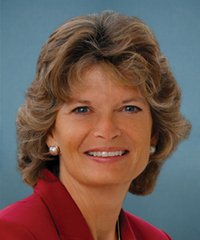
Lisa Murkowski, Alaska’s senior U.S. Senator, is a third generation Alaskan proudly serving as the first Alaskan born senator. Murkowski was born in Ketchikan and raised in towns across the state, including Wrangell, Juneau, Fairbanks, and Anchorage. She is married to Verne Martell and they have two grown sons. Lisa loves spending time in the Alaska outdoors. She’s an avid skier, has hiked on glaciers, enjoys fall duck hunts, and has a pretty impressive King Salmon mounted on her office wall.
Senator Lisa Murkowski has long advocated for the betterment of Alaska Natives, American Indians, and Native Hawaiian people on a variety of issues. She was the first member of the Alaska Congressional Delegation to receive the National Congress of American Indians’ coveted Congressional Leadership Award and the National Indian Health Board’s Jake White Crow Award for Lifetime Achievement.
Senator Murkowski is the Vice Chairman of the Senate Committee on Indian Affairs and the Ranking Member on the Senate Appropriations Subcommittee on Interior, Environment, and Related Agencies, which funds the Bureau of Indian Affairs (BIA), Bureau of Indian Education (BIE), and the Indian Health Service (IHS). In Senator Murkowski’s tenure on the Indian Affairs Committee, she shepherded the first reauthorization of the Indian Health Care Improvement Act in more than a decade, as well as the landmark Tribal Law and Order Act through the Senate. Through Murkowski’s leadership on the Senate Energy and Natural Resources Committee she oversaw implementation of the Alaska Native Claims Settlement Act and the Alaska National Interest Lands Conservation Act, including its crucial subsistence provisions.
For years Senator Murkowski has worked to help raise awareness, educate her colleagues, and develop lasting legislation to address the public safety crisis in Alaska. In October 2020, Savanna’s Act and Not Invisible Act, two bills introduced by Senator Murkowski aimed at addressing the crisis of missing, murdered, and trafficked Indigenous people were signed into law. Both bills aim to combat the epidemic by improving the federal government’s response through increased coordination, development of best practices, and creation of an advisory committee on violent crime. She has successfully included funding in appropriations bills for the BIA and IHS to take a comprehensive look at the issue of missing and murdered Indigenous women, which includes funding for cold case work, background checks, equipment needs, and forensic training.
Securing a promising future for Native youth is one of Senator Murkowski's highest priorities. Senator Murkowski was a founding director of the Center for Native American Youth at the Aspen Institute, a program dedicated to improving the health, safety, and overall well-being of Native youth. Senator Murkowski takes great pride in her 2006 legislation which made it possible for more Alaska Native Corporations to make stock available to Native youth born after 1971. Senator Murkowski leverages her seat on the Senate Health, Education, Labor, and Pensions Committee to advocate for Alaska Native education and Native language preservation. These efforts include the creation of the Commission on Native Children to identify the complex challenges facing Native children in Alaska and across the country, made possible through her legislation, the Alyce Spotted Bear and Walter Soboleff Commission on Native Children Act.
Senator Murkowski is a long-standing proponent of meaningful and in-depth consultation between federal and tribal governments. In response to complaints from Alaska tribal governments that the BIA denied them access to tribal court funds, Senator Murkowski appropriated funds to enable tribes in PL 280 states to support their tribal courts. And the Fish and Wildlife Service agreed to re-designate Saxman as a rural community for subsistence purposes after Senator Murkowski filed legislation to end a decade of impasse.
Senator Murkowski works with Alaska Native communities and residents in rural Alaska on a wide range of issues including energy, infrastructure, health care, rural broadband, public safety, and food security.
Alaska’s fisheries consistently remain the most abundant and sustainably managed in the nation. The seafood industry is one of Alaska’s top private sector employers along with oil and gas and tourism, creating over 56,000 direct jobs [KA(1] and nearly $2 billion in labor income throughout the state. Alaska's commercial, sport, and subsistence fisheries are at the heart of coastal Alaska and the economic livelihood for tens of thousands of Alaskans who are employed in the industry, including 15% of working age rural residents. As diverse as these fisheries may be, the most important common trait seen across the industry and fishing communities is their dependence on responsibly managed marine resources. These fisheries rely heavily on good science and proper guidance from resource managers.
Senator Murkowski has supported Alaska's fisheries and coastal communities through legislation and her position on the Senate Appropriations Committee, where she sits on the Commerce, Justice, and Science Subcommittee. She has a lead role in the direction and budgeting priorities of the National Oceanic and Atmospheric Administration (NOAA), which includes oversight of the National Marine Fisheries Service (NMFS). As federal budgets decline, Senator Murkowski has worked to maintain critical funding for fisheries and marine mammal research and management. Alaskan priorities she has fought for include NMFS surveys in the Bering Sea and Gulf of Alaska, emergency fisheries disaster funds, implementation of the Yukon River Salmon Agreement and Pacific Salmon Treaty, and the Pacific Coastal Salmon Recovery Fund. Effective conservation and management of salmon is vital to Alaskans from all walks of life. The funding that Senator Murkowski secures for Pacific salmon programs supports runs that families depend on for commercial fishing livelihoods, along with subsistence and recreation.
Through her chairmanship of the Interior, Environment, and Related Agencies Appropriations Subcommittee, Senator Murkowski is also working to combat threats posed to Alaskan fish stocks. This includes funding water quality monitoring in U.S.-Canada transboundary rivers, ensuring that projects outside Alaska can be monitored for any negative impacts they have on Alaskan ecosystems, fish stocks, and communities. Senator Murkowski also supports robust funding for programs that maintain Alaska’s freshwater systems as healthy fish habitat and combat invasive species. Non-native animals and plants can degrade habitat and hurt populations of fish including salmon, trout, arctic char, and more, harming fishing opportunities in lakes and streams across the state.
Senator Murkowski also serves on the Homeland Security Appropriations Subcommittee, which oversees the United States Coast Guard. The U. S. Coast Guard has a critical role in monitoring marine fisheries and enforcing associated regulatory and statutory schemes, as well as conducting search and rescue operations in Alaskan waters. She actively supports the Coast Guard's budget to ensure that the agency maintains its vital presence in the state. Senator Murkowski is deeply committed to the safety of Alaska’s fishermen, and has cosponsored legislation[RA(2] [KA(3] to support training programs that further enhance safety off Alaska’s coasts.
Senator Murkowski is a founding member and co-chair of the Senate Oceans Caucus, which provides a platform for the Senator to educate her colleagues on issues like illegal, unreported, and unregulated (IUU) fishing, marine debris cleanup efforts, and ocean observation. All of these issues greatly affect the fishing industry in Alaska and around the world, and thanks to Senator Murkowski’s leadership, legislation has been introduced to address each. In 2015, Senator Murkowski introduced legislation to strengthen enforcement capabilities relating to IUU fishing. An essentially identical bill that originated in the House passed the Senate by unanimous consent and was signed into law by the President. In 2017, Senator Murkowski supported efforts to combat the mounting problem of marine plastic debris as an original co-sponsor to the Save Our Seas Act, which has also become law. To address the final original priority of the Senate Ocean Caucus, Senator Murkowski introduced the BLUE GLOBE Act in March 2019, which improves U.S. ocean monitoring, exploration, and innovation. She will keep leading caucus efforts on new fronts, advocating for Alaskan coastal communities and the Blue Economy. Her introduction of the Coastal Communities Ocean Acidification Act in March 2019 and of the Digital Coast Act in April 2019 demonstrates her commitment to supporting community resilience in the face of emerging challenges.
In addition to Senator Murkowski’s support for Alaska’s seafood industry through her committee and caucus positions, she continues to actively push forward legislation to advance Alaskan fishing interests. Senator Murkowski has worked tirelessly to exempt small commercial fishing vessels from unnecessary and over-burdensome Environmental Protection Agency (EPA) incidental discharge regulations. She was instrumental in securing a series of temporary exemptions, and finally, a permanent exemption in the 2018 Coast Guard Reauthorization Act that granted relief Alaskan fishermen have long deserved. Combatting federal government overreach that impedes Alaskan commerce is a priority for Senator Murkowski, whether that means pushing for regulation reform, working to prevent designation of national monuments without Congressional approval, or otherwise ensuring that Alaskans have a voice in decisions that impact their livelihoods.
After the FDA’s decision in November, 2015, to approve genetically engineered (GE) salmon for human consumption, Senator Murkowski promised to fight back for the health of both consumers and Alaska’s fisheries. In May 2016, Murkowski successfully included a provision in the Agriculture appropriations bill that requires the Food and Drug Administration (FDA) to mandate labeling of GE salmon, ending imports of GE salmon. In March 2019, the FDA ended this import ban despite a lack of sufficient labeling guidelines. Senator Murkowski is now fighting this reckless decision. She believes that genetically engineered salmon pose a serious threat to the livelihoods of fishermen and the health and well-being of Americans across the nation. Requiring labeling of genetically engineered salmon helps to maintain Alaska’s gold-standard reputation for years to come, and protects those who want to know what it is they are consuming.
Senator Murkowski has also continued her fight to ensure that Russian-origin pollock can no longer be sold in the U.S. market as Alaska pollock. In the Fiscal Year 2016 Omnibus bill, Senator Murkowski secured language to allow only the term “Pollock” as an Acceptable Market Name and reserve the use of “Alaska” or “Alaskan” as a geographical descriptor for only fish caught in the waters off Alaska, protecting our Alaskan fishermen and the quality, reputation, and credibility of one of the most important species to Alaskan fisheries.
Senator Murkowski understands that fishing is a way of life for many of her fellow Alaskans and supports federal policy that secures its thriving, sustainable future. By cosponsoring legislation like the Young Fishermen’s Development Act and protecting the core federal fisheries management structures that work for Alaska, she is working to ensure fishing and the seafood industry will be a cornerstone of Alaskan life for generations to come.
Alaska is finally on the verge of much-needed improvements to the 2001 Roadless Area Conservation Rule, better known as the Roadless Rule.
In January 2001, the outgoing Clinton administration imposed this sweeping federal regulation on millions of acres of national forests across the country. The rule established permanent prohibitions on road construction, road reconstruction and timber harvesting. Over the years, it has significantly restricted access to forest lands and worked against the economic opportunities that local communities need to survive and prosper.
Alaska, with two national forests, the Tongass and the Chugach, has been hit particularly hard by the Roadless Rule. The Tongass has more than 9.7 million acres of inventoried roadless areas, while the Chugach has 5.4 million acres. Taken together with designated federal wilderness areas, that means nearly 93 percent of the Tongass and 99 percent of the Chugach are off-limits to development.
In southeast Alaska, where the Tongass makes up the vast majority of the land base, the Roadless Rule has led to a substantial loss of access for the timber, mining, transportation, tourism, recreation, and renewable energy industries. In combination with further restrictions under the Tongass Land and Resource Management Plan, the Forest Service’s regulatory regime has cost jobs, diminished incomes, kept energy prices high, and even led to population losses in some communities as residents are forced to look elsewhere for stable, year-round work.
Senator Murkowski believes the Roadless Rule should never have been applied to Alaska. She believes it makes no sense for the Tongass, the nation’s largest national forest, which is the size of West Virginia, equivalent to 52 national forests in the eastern United States, and home to 32 islanded communities intermingled with Forest Service lands. She recognizes the ongoing harm the rule has brought to southeast communities, and is pursuing both legislative and administrative options to repeal and improve it.
In Congress, Senator Murkowski has introduced legislation and sought to add language to appropriations bills to exempt Alaska from the Roadless Rule. She also supports an administrative path that has been initiated by the State of Alaska and the Forest Service to develop an Alaska-specific Roadless Rule.
The administrative process began with a State petition from Governor Bill Walker. After entering into a Memorandum of Understanding with the State, the Forest Service is now undertaking an Alaska-specific rule, in line with those already in place in Idaho and Colorado. Governor Walker also issued an Administrative Order to form the Alaska Roadless Rule Citizen Advisory Committee, which consists of 13 voting members drawn from stakeholder groups and industries.
The scoping and public comment period for this rule is now well underway. The Forest Service has held public meetings in Juneau, Ketchikan, Hoonah, Craig, Angoon, Point Baker, Tenakee Springs, Wrangell, Sitka, Petersburg, Yakutat, Kake, Anchorage, and Washington, DC.
Senator Murkowski is committed to reforms that will allow Alaska’s forests to be working forests. She urges Alaskans to engage in this process and is encouraging the Forest Service to ensure it fulfills its requirements for consultation with Alaska Natives.
Senator Murkowski is considered the leading expert in Congress on Arctic policy and polar affairs. Throughout her years in the Senate, Murkowski has continuously worked in a bipartisan nature to raise awareness amongst her colleagues on Capitol Hill and across the U.S. that— because of Alaska—qualifies as an Arctic nation, and consequently gives the nation a seat at the table for Arctic policy negotiations on the global stage. As a fierce advocate for the Arctic region and the people who live there, Senator Murkowski has represented the U.S. and its Arctic policy agenda alongside cabinet members at international forums such as the Conference of Arctic Parliamentarians and Arctic Council ministerial meetings.
The Senator has strived to educate Congress and the public about the importance of the Arctic region to the United States. In April 2015, Senator Murkowski and Senator Angus King of Maine joined forces to establish the Senate Arctic Caucus. The Arctic Caucus is the first entity in Congress to bring attention to the laws and policies at stake in the Far North. The purpose of the Caucus is to convene members of Congress, subject matter experts, federal agency heads, and the public to confront policy questions and advance a coordinated investment in arenas such as national security, scientific research, commerce, global trade, the environment, maritime affairs, and other relevant issues impacting the Arctic region.
As new challenges and opportunities emerge due to the changing climate and diminishing sea ice, Senator Murkowski’s efforts reflect the U.S. imperative to position itself as an Arctic nation and global leader to maximize U.S. presence and priorities in the north. With non-Arctic nations like Italy, India, and China beginning to engage and invest in the Arctic region, Senator Murkowski continues to push the U.S. to assert strong leadership and implement clear and direct policies to protect U.S. interests in the Arctic region, and the American people who live and subsist above 66.5°.
Senator Murkowski has led the charge to recapitalize and expand America’s fleet of icebreakers. In May 2016, Murkowski secured a win in this decades-long fight when the Senate Defense Appropriations allocated $1 billion to fully fund the construction of the first U.S. polar icebreaker in 25 years. Currently, the United States has two polar icebreakers, while Russia has 11 of comparable capability. Modernizing our nation’s icebreaker fleet, something Senator Murkowski has advocated for since her first days in the Senate, would ensure that our nation has the assets needed to assert our influence in the Arctic region and be prepared to respond to any emergencies.
Senator Murkowski believes one of the most essential functions of Congress is to pass a balanced budget that sets a responsible spending plan for federal government services. For too long, the U.S. government has been spending more than it takes in and borrowing large sums of money to make up the difference. To set the nation on a more stable financial path, it is critical for Congress to set sustainable funding levels for the federal government, reduce overall spending levels, and enact comprehensive tax reform and mandatory spending changes.
Senator Murkowski also believes that part of the President’s responsibility to lead includes offering credible and responsible ideas to put our Nation back on a sustainable path. Instead of offering solutions to address the problems that lead to sequestration, the President has frequently failed to present timely budgets, instead proposing budgets that exceed current spending limits and raise taxes. As America continues to climb out of the 2008 Recession, more spending and more taxes are not responsible solutions to the nation’s fiscal problems.
In order to strengthen the economy and put the country back on track, Senator Murkowski believes smart spending reductions are needed to target the nation’s growing, unsustainable debt while avoiding future sequestration scenarios.
Appropriations:
In her capacity as a member of the Senate Committee on Appropriations, and as Chairman of the Appropriations Subcommittee on the Interior, Environment, and Related Agencies, Senator Murkowski works hard to ensure Alaska’s interests are not forgotten at the federal level.
The appropriations process presents an important opportunity to balance federal priorities, including critical investment in infrastructure necessary for a healthy economy, against wasteful spending and unnecessary so-called “pork.” In 2011, Senator Murkowski joined her Senate colleagues to ban earmarks. While she believes strongly that earmarks created opportunities for waste, fraud, and abuse and that such abuses must not be tolerated, it is still important to understand the specific needs of our Great State do not automatically constitute wasteful spending.
Alaska has unique needs that set it apart from other states and it can be challenging to ensure Alaska receives its fair share of federal funds, especially in light of the fact that a majority of our lands are federally owned, and as a relatively new state, Alaska still has not seen the federal investment in infrastructure that occurred in the Lower 48 decades ago. Senator Murkowski works hard to educate her colleagues on the unique challenges of Alaska and the federal government’s responsibility to address those needs as it has in other states.
While the earmark ban remains in effect, it is important for Senator Murkowski to hear from you. If you have a program or project that would benefit from federal funding, please share your ideas with Senator Murkowski here.
National Debt and Deficit:
Senator Murkowski believes that the national debt and deficit is one of the most important issues facing our country. Since the 2008 Recession, the ratio of national debt as a share of our national economy, or gross domestic product (GDP), has reached astronomical limits – as much as 78 percent of our GDP. At current rates, the national debt amounts to more than $56,000 per citizen. This is unsustainable and threatens the stability of the United States as the world’s strongest economic power. In order to set sustainable funding levels, Congress must reduce overall spending levels, balance the budget, achieve comprehensive tax reform, and enact mandatory spending changes. These changes are imperative to ensure a strong economy and a strong U.S. dollar to support higher wage jobs for hard-working Americans and a stronger middle class.
General Billy Mitchell, considered as the father of the U.S. Air Force, said in 1935 that “…whoever holds Alaska will hold the world… I think it is the most important strategic place in the world.” Senator Murkowski’s mission is to sustain and enhance Alaska’s contribution to U.S. national security interests, specifically through her membership on the Defense and Military Construction Appropriations subcommittees. Senator Murkowski’s recent successes include:
The military’s recognition of Alaska’s strategic value is expected to trigger the infusion of $561 million for construction projects into our state’s economy over the next three years. Construction projects associated with the F-35 and LRDR programs are expected to create as much as 2,689 new jobs. Upon completion, these projects will generate 1,630 permanent jobs. A strong proponent of local hire, Senator Murkowski is pushing the military for assurances that Alaska contractors and Alaska’s construction workforce will be at the head of the line for these opportunities.
Senator Murkowski has been working to protect the 4-25 Airborne Brigade Combat Team at Joint Base Elmendorf-Richardson from downsizing; securing a public commitment from the Army Chief of Staff to delay the scheduled downsizing. She subsequently persuaded colleagues on the Senate Appropriations Committee to suggest that the Army permanently abandon the downsizing plan.
The Arctic represents the next frontier in Alaska’s strategic contribution to global defense. Senator Murkowski has long fought to fully fund the acquisition of Arctic-capable icebreakers, and on May 24, 2016, the Senate Defense Appropriations Subcommittee voted to appropriate an unprecedented $1 billion dollars for a new heavy icebreaker.
A champion of military families, Senator Murkowski has worked to improve family support and quality of life on Alaska's military installations and to ensure that promises to military retirees are kept. She supports a fair military pay structure, opposes arbitrary reductions in the Basic Allowance for Housing, and supports preservation of the commissary benefit. She has been working for more than a decade to improve the TRICARE provider network in Alaska. She opposes both the SBC/DIC offset and restrictions on concurrent receipt of disability benefits.
Senator Murkowski is regarded as a key congressional leader on efforts to strengthen sexual assault prevention, response, and accountability. The reforms which have come to the Alaska National Guard over the past year are the direct result of Senator Murkowski’s leading role in ensuring that allegations of misconduct were fully investigated and resolved, and of her relentless push for transparency and accountability.
In recognition of her service to the military community, Senator Murkowski is a proud recipient of the Jim Messer Award, given by the Greater Fairbanks Chamber of Commerce to a civilian who, as a member of the Interior Alaska community, has made outstanding contributions in support of the military. Her work to promote community-military relationships earned national recognition as she was selected by the Association of Defense Communities to receive the Congressional Leadership Award. The U.S. Navy has also recognized Senator Murkowski with its Distinguished Public Service Award in recognition of her service as a member of the Board of Visitors of the U.S. Naval Academy and longstanding support for Navy programs.
Senator Murkowski firmly believes that education is the engine of Alaska's future. For Alaskans to find and keep good, well-paying jobs, they need to have the knowledge and skills to get the job done. In order to build economic opportunity, Alaska needs people who have the skills to start and sustain new businesses and keep established businesses competitive. Alaska’s schools, job training programs, and universities are the sparks that make Alaska's engine run strong. Just as Alaska Native elders have, for thousands of years, made sure that young people learn the skills they need to survive and adapt in a harsh environment, we must all ensure that each and every Alaskan child has the knowledge and skills they need to keep Alaska strong and vital.
As a mother and former PTA president, education is one of Senator Murkowski's top priorities. Whether you are an educator, a parent, a business owner, or a member of the community, you want to make sure that children leave school prepared to contribute to their communities in a positive and meaningful way. In order to reach that goal, we must ensure that high-quality education is available to every child in every corner of our country, no matter how remote or urban the setting and that our communities are active partners in helping our children grow up strong.
Senator Murkowski has focused her attention on fighting and fixing one-size-fits-all mandates from Washington, D.C., and to ensuring that Congress addresses the problems we encounter due to the state's unique characteristics.
As a member of the Senate Health, Education, Labor, and Pensions Committee and as a member of the Senate Appropriations Committee, Senator Murkowski has been in an excellent position to put in place policies and fund programs that work for Alaskan students, educators, parents, and our state as a whole.
That work came to fruition with the enactment of the Every Student Succeeds Act, or ESSA in 2015. ESSA returns control over education to Alaskans. It eliminates the No Child Left Behind mandates for “Adequate Yearly Progress” that gave Alaskan schools 31 ways to be labeled a “failure” but no ways to get credit for improvement. It removes “Highly Qualified Teacher” mandates that never worked to identify the truly exceptional teacher. And it includes multiple provisions that Senator Murkowski was able to include to meet the needs of Alaska Native communities, working parents, school administrators, and teachers.
As a senior member of the Energy and Natural Resources Committee and a member of the Senate Climate Solutions Caucus, Senator Murkowski is leading the effort to reform the United States’ resource policies and is well positioned to help Alaska develop more of its world-class energy and mineral deposits. During her chairmanship in the 116th Congress, Senator Murkowski is credited with the enactment of numerous landmark pieces of legislation involving the nation’s energy technology, natural resources, and public lands. These include the John D. Dingell Conservation, Management, and Recreation Act, the Great American Outdoors Act, and the Energy Act of 2020. These pieces of legislation will ensure that the United States remains a global competitor in energy markets and a robust developer of natural resources, while protecting the lands and environment that we all hold so dear.
Recognizing Alaska’s decades-long record of strong environmental stewardship, Senator Murkowski supports the responsible development of the state’s natural resources. Greater production of everything from oil, natural gas, and coal to hydropower, wind, solar, and biomass will create new jobs and economic opportunities, increase national security, and strengthen the global competitiveness of our country.
In contrast to federal agencies’ desire to lock away our most promising prospects, Senator Murkowski is a champion of access to federal lands and waters. This is needed to facilitate energy production in a small portion of the non-wilderness portion of the Arctic National Wildlife Refuge (ANWR), on Alaska’s Outer Continental Shelf, and in the National Petroleum Reserve-Alaska. These areas collectively hold almost 35 billion barrels of conventional oil and could refill the critical 800-mile long Trans-Alaska Pipeline System, which is currently running two-thirds empty. In the 115th Congress, Senator Murkowski wrote the resource title of the Tax Cuts and Jobs Act, which created new economic opportunities by opening up the non-wilderness 1002 Area of ANWR for responsible energy development.
Senator Murkowski is also working to ensure that no major federal hurdles emerge for the Alaska natural gas pipeline project, which will allow the state to produce and market the vast quantities of natural gas stranded beneath the North Slope. She has introduced and advanced legislation to ensure that Alaska receives a fair share (37.5 percent) of the revenues from offshore production in federal waters, and is the lead proponent of legislation to increase America’s mineral security through resource assessments, permitting reforms, and similar activities.
A firm believer that “energy is good,” Senator Murkowski is a strong proponent of ‘all of the above’ policies to make energy abundant, affordable, clean, diverse and secure. She promotes energy innovation, seeks to lower the costs of renewable energy, and encourages increases in energy efficiency. These efforts will help cut high energy costs in rural Alaska communities, reduce the emissions blamed for climate change, and bolster the long-term energy security of the United States.
In 2020, Senator Murkowski championed landmark legislation which was the first comprehensive update to America’s energy policy in 13 years. The Energy Act of 2020 included 35 billion dollars in funding across the spectrum of energy technologies, from renewables like wind, solar and geothermal, to cutting edge advanced nuclear technology, to carbon reduction research and technologies such as Carbon Capture, Utilization, and Sequestration (CCUS). The Energy Act will lower greenhouse gas emissions in the United States, and improve electrical efficiency and reduce costs for consumers and producers. Notably, the Energy Act is the first step in shoring up domestic supply chains of critical minerals, those minerals necessary to produce a variety of goods and technologies, ranging from renewable energy infrastructure like solar panels and wind turbines, to industrial defense applications. The legislation was overwhelmingly bipartisan, with nearly 70 Senators sponsoring or cosponsoring provisions included in the final energy package. The Energy Act was signed into law as Division Z of the Consolidated Appropriations Act of 2021 on December 27, 2020.
Senator Murkowski is a member of the Health, Education, Labor and Pensions (HELP) and Appropriations Committees.
Health Care Reform:
Senator Murkowski remains committed to ensuring that all Alaskans have access to affordable, quality health care. She knew that the Affordable Care Act (ACA) would create problems in a state like Alaska. That is why she voted against the law, and has continuously worked to address the provisions in the law that are most harmful to Alaskans. To this day, Senator Murkowski believes health care reform must be addressed due to the continued, dramatic increases in insurance premiums each year and an individual exchanges that has be reduced to only 1 provider, Premera, due to the unsustainable course of the ACA as is. Yet, there are many provisions of the ACA that have worked for Alaska that Senator Murkowski believes should be retained. Those provisions are:
Murkowski helped champion several ways to lessen the burdens created by the ACA, including:
Other Health Priorities:
Senator Murkowski strongly supports women’s reproductive freedoms, including the right to an abortion up to viability established by Roe v. Wade and Planned Parenthood v. Casey, and believes that individuals have the liberty to make choices about their own health. Senator Murkowski wants those protections to be codified in federal law and as a result, introduced the Reproductive Choice Act, which would make the standards set by the court in Roe and Casey federal law and reassure women that the rights they have relied on for almost 50 years will continue to be the law of the land.
On other fronts, Senator Murkowski supports a robust research budget for the National Institutes of Health, so the next generation of cures and treatments can be found. Amyotrophic Lateral Sclerosis (ALS), diabetes, and obesity are among her primary concerns and she advocates for enhanced research funding for these diseases specifically, as well as expanding coverage under Medicare to aid disabled patients as they endeavor to live a normal life.
Alaska has the highest rate of Fetal Alcohol Spectrum Disorders (FASD) in the nation. Senator Murkowski is committed to doing all she can to put an end to FASD, including introducing legislation to provide support for individuals and their families afflicted with FASD. Senator Murkowski’s legislative efforts also include providing support to improve the health of new mothers and children through the Bringing Postpartum Depression Out of the Shadows Act. This legislation combats postpartum depression by encouraging routine screening and new connections to treatment options for pregnant and postpartum women.
Opioid addiction has become one of the most pressing public health issues facing families across the nation, including Alaska. Senator Murkowski co-sponsored the Comprehensive Addiction and Recovery Act, a bill to fight the opioid abuse epidemic, by supporting community-based drug treatment programs and providing critical resources for those battling opioid addiction. The bill passed the Senate in March 2016. Senator Murkowski is also working to address our nation’s mental health crisis through legislation which will help ensure Alaskans suffering from mental illness and substance use disorders receive the care they need.
Dear Alaskan,
I’m pleased to share some of the incredible highlights for Alaska contained within the Infrastructure Investment and Jobs Act, which the President signed into law on November 15, 2021.
This bipartisan infrastructure package is one of the most consequential legislative efforts I’ve ever worked on. I’m proud to have played a leading role in its creation, and have many of you to thank for helping to pinpoint ways to address Alaska’s unique and pressing infrastructure needs.
Over the next decade, we will be able to build and modernize our core basic infrastructure—more and better roads, safer bridges, our marine highway system, and expanded ports and airports. We’ll invest in clean drinking water systems, reliable broadband, new energy innovation and resilience projects, and so much more—without raising taxes or worsening inflation.
The Infrastructure Investment and Jobs Act will impact communities across Alaska. I look forward to working with you to maximize the assistance we bring to our state, and to seeing the benefits this historic measure brings for generations to come.
Stay safe and be well,
Lisa
Alaskans are uncompromising about their Second Amendment rights and Senator Murkowski is committed to protecting those rights in Washington, D.C. Enabling lawful firearms owners to exercise their Second Amendment rights without government interference is a top priority of hers.
Senator Murkowski serves on the subcommittees of the Senate Appropriations Committee that fund the Justice Department, including the Bureau of Alcohol, Tobacco, Firearms and Explosives and the Department of Homeland Security. She uses her membership on these subcommittees to raise questions about regulatory initiatives that undermine access to firearms and ammunition. In 2015, these interactions caused ATF to abandon an effort to ban M855 (“green tip”) ammunition as an armor piercing bullet. Because of this successful effort, use of green tip ammunition for legitimate sporting purposes remains lawful.
The last major gun control battle came to the Senate floor in 2013 following the tragic Sandy Hook shootings. A comprehensive gun control bill was ultimately pulled from the Senate floor due to widespread opposition from Second Amendment advocates, but not before a lengthy debate.
During those debates, Senator Murkowski voted to defend Second Amendment freedoms on each and every roll call vote. Senator Murkowski steadfastly opposed the so-called Manchin-Toomey amendment requiring background checks for private firearms transactions, opposed the Feinstein gun ban amendment, opposed the Lautenberg amendment to restrict the size of magazines, and opposed all efforts to create a national gun registry.
Senator Murkowski also supported a number of efforts to enhance the protection of lawful firearms owners under federal law. These included Senator Lee’s amendment that would have required a two thirds vote for adoption of future gun control measures, Senator Inhofe’s amendment to prevent the United States from entering into the United Nations Arms Trade Treaty, Senator Cornyn’s concealed carry reciprocity amendment, Senator Burr’s amendment to prevent the government from blanket denying veterans undergoing PTSD treatment access to firearms, and Senator Barrasso’s amendment prohibiting states from invading the privacy rights of firearms owners under state freedom of information laws. She also cosponsored Senator Grassley’s amendment to improve federal efforts to identify and treat those experiencing mental illness and end straw purchases and trafficking of illegal firearms.
Senator Murkowski continues to support legislation that advances the Second Amendment freedoms of Alaskans and works to proactively identify legislation that inhibits Second Amendment interests.
Senator Murkowski is well known for her passionate and uncompromising advocacy for Alaska’s veterans. A current member of the Veterans Affairs Appropriations Subcommittee, Senator Murkowski’s efforts have driven change in the Alaska VA Healthcare System by boosting access, increasing quality, and ensuring that VA appropriations keep pace with the cost of delivering healthcare. Senator Murkowski has also pressed for local and timely processing of veteran benefits claims at the Veterans Benefits Administration Alaska Regional Office.
Since the beginning of the conflicts in Iraq and Afghanistan, demands on the Alaska VA Healthcare System have been steadily increasing. The return of veterans who served in the Middle East to nearly 100 rural Alaska communities required that the VA step up and improve service to Alaska veterans where they lived.
The VA’s game-changing decision to partner with the Alaska Native Healthcare System to care for rural veterans was the direct outgrowth of Senate hearings Senate Murkowski conducted in November 2007, which exposed that the VA was unprepared to treat the service-connected issues of Iraq veterans returning to rural Alaska. And when the Alaska VA’s volunteer Tribal Veteran Representative program floundered because the VA claimed it lacked funds to send recruits to training, Senator Murkowski stepped in and showed VA a way to fund the travel. Today there are over a hundred volunteer Tribal Veteran Representatives serving Alaska’s veterans.
At one time the Alaska VA had no hesitation about directing Alaska veterans to fly to VA facilities in the Lower 48 for care it could not provide and did not want to purchase from community providers. That came to a halt under scrutiny from Senator Murkowski. In April 2010, then VA Secretary Shinseki admitted to Murkowski, “We are going to look at very closely why we would send a veteran on a 2,000-mile journey if there is competent, safe healthcare available close by.” Shinseki ended the practice after a September 2010 VA Inspector General report, commissioned by Murkowski, demonstrated that hundreds of Alaska veterans were in fact being sent to the Lower 48 for care that could have been acquired from community providers in Alaska. Thus was born the “Care Closer to Home” program.
These relationships enabled the Alaska VA to avoid the waiting list scandals that plagued Lower 48 VA facilities in 2014. When Alaska VA recognized that it was running a wait list it was poised to work with community care partners to seamlessly absorb the overflow. However, the Alaska VA healthcare system was not immune from the fallout of the Phoenix scandals. So-called “reforms” in the national VA healthcare delivery system have undermined Alaska’s success, causing Senator Murkowski to jump in once again and fight for Alaska’s veterans. In 2015, Senator Murkowski became aware of reports that the VA would pull out of the Joint Venture Hospital at JBER, sever its relationships with the Alaska Native healthcare system, and end “Care Closer to Home”—throwing Alaska veterans who couldn’t get their care at the Alaska VA into the new “Choice Card” program. In response to her efforts, the VA cancelled plans to withdraw from the Joint Venture Hospital and agreed to maintain its relations with the Alaska Native healthcare system. However, “Care Closer to Home” remains in jeopardy. Senator Murkowski, an early skeptic of the Choice Card program, emerged as one of its most persistent critics and remains so to this day. As a result of her efforts, the Senate Appropriations Committee report to accompany the Fiscal Year 2017 VA Appropriations bill notes that the Choice Act did not require the VA to abandon its successful community care program in Alaska and urges the VA to fully restore it.
Senator Murkowski has also pressed the VA to improve its capability to deliver needed services in its own facilities. She has criticized the VA for failing to adequately staff the Wasilla Community Based Outpatient Clinic (CBOC) and has questioned the revolving door personnel problem at the Fairbanks CBOC. She has also questioned the VA’s decision to shutdown the operating rooms at the Anchorage clinic. She strongly supports the Vet Center program and has pressed the VA to make Vet Center services more readily available to rural veterans using telehealth technology.
A strong believer in independent VA oversight, Senator Murkowski has commissioned numerous VA Inspector General reviews of the VA healthcare system, including a review of wait times, an assessment of staff vacancies, and chart reviews of veteran quality of care concerns. She has also commissioned a nationwide multiyear Government Accountability Office review of the Choice program.
Murkowski is a proud co-sponsor of the Clay Hunt Suicide Prevention for American Veterans Act, which provides several measures to improve mental healthcare and suicide prevention resources to our military. The bill signed was signed into law in February 2015.
As we continue to work to respond to COVID-19, you can visit this page for up-to-date information regarding the disease as well as to learn what resources are available to help mitigate the health and economic impacts of this pandemic, including travel advisories and updates on loan assistance.
It’s important to remember that all issues impacting public health should be taken seriously, and only reliable sources should be trusted. I encourage everyone to seek out reputable sources. We all must work to ensure that we are spreading facts, not fear.