
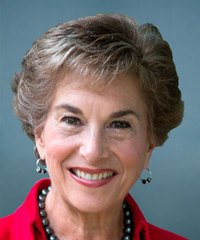
Jan Schakowsky was elected to represent Illinois' 9th Congressional District in 1998, after serving for eight years in the Illinois State Assembly. She is in her twelfth term.
Schakowsky serves in the House Democratic Leadership as a Senior Chief Deputy Whip. She is a member of the House Democratic Steering and Policy Committee, House Budget Committee, as well as the House Energy and Commerce Committee, where she serves as Chair of the Consumer Protection and Commerce Subcommittee, and as a member of the Environment and Oversight & Investigations Subcommittees.
Every day, 10,000 Americans turn 65 years old. As the Co-Chair of the House Democrats Task Force on Aging and Families in the House of Representatives, I believe it is essential that we nurture a culture that respects older Americans and that protects the financial and health security that Social Security, Medicare and Medicaid provide.
Older Americans have spent many years working to raise families, pay their taxes, protect our country and build our communities. They have the right to the benefits that they have earned and to know that they will have the resources they need in retirement. That is why I so strongly oppose efforts to privatize Social Security or reduce benefits, to turn Medicare over to private insurance companies and turn it into "vouchercare", or jeopardize access to long-term care services by cutting Medicaid and turning it into a block grant. We can ensure the longevity of these programs by making them more efficient. We do not need to cut benefits.
I am also committed to expanding access to the full range of long-term care services and supports, and helping seniors age in place within their own communities. We must build upon the Older Americans Act to meet those needs.
As the co-chair of the House Democratic Caucus on Aging and Families and the former executive director of the Illinois State Council of Senior Citizens, I am committed to protecting and improving Medicare. I am strongly opposed to efforts to eliminate Medicare’s guarantee by privatizing it, leaving seniors and people with disabilities on their own to deal with private insurance companies, and shifting costs onto the backs of seniors and people with disabilities.
Before Medicare was created in 1965, half of all senior citizens were uninsured. Today, Medicare provides virtually universal coverage and helps nearly 50 million seniors and persons with disabilities stay healthier and live longer by providing affordable, quality and reliable medical care. I am proud of the Medicare improvements in Obamacare: lowering prescription drug costs by closing the gap in benefits (the "donut hole"), expanding access to free preventive services and a new annual wellness exam, and fraud-fighting measures that continue to save billions of dollars.
It is always important that Congress works to eliminate waste, fraud and abuse. The best way to address rising health care costs is to improve efficiency and accuracy in payments – not increase cost-sharing or reduce reimbursements to providers below reasonable levels.
During the Obama Administration, we used new tools and stepped up enforcement activities, creating the Health Care Fraud Prevention and Enforcement Team (HEAT) in May 2009, and I am pleased that ObamaCare continues to provide even more tools to fight waste, fraud and abuse. The anti-fraud provisions include an enhanced background check mechanism to ensure that fraudulent providers are not allowed to “re-up” in Medicare and Medicaid, imposing tougher penalties for those who make false statements or refuse to provide information needed for audits, enhancing the national health care fraud and abuse database, and providing new funding for Medicare and Medicaid Integrity Programs. Through these efforts, the government saved over $4.1 billion in 2011 alone.
I believe that we can make Medicare even better. For example, we can do even more to make medications affordable by requiring that Medicare uses its bargaining power to negotiate with drug companies and through the creation of a Medicare-administered drug benefit.
I am proud of the improvements that the Affordable Care Act – Obamacare – makes for seniors. Under the law, seniors will get new benefits: free preventive services like cancer and diabetes screenings, a new annual wellness exam, and medical therapy to prevent dangerous drug interactions. Obamacare lowers drug costs and eliminates excess payments to private Medicare Advantage plans that drive up Part B costs to everyone. It improves quality and provides more access to doctors and other health care providers.
I am pleased that many of my proposals to protect seniors were included in Obamacare, including new Elder Justice grants to prevent elder abuse, criminal background checks for long-term care workers, and mandatory training to stop patient abuse and improve care of patients living with dementia.
Social Security is a national treasure. Without its guaranteed, inflation-adjusted benefits, about half of seniors would be living in poverty. The average Social Security retirement benefit is modest – about $17,536 a year ($2,000 less for women) but 6 in 10 seniors rely on those benefits for a majority of their income and 1 in 3 for 90 percent of more. That is why I so strongly oppose proposals to cut benefits, change the formula to reduce annual cost-of-living adjustments, or raise the age of eligibility. Social Security doesn't contribute to today's or tomorrow's deficits – by law it cannot borrow – so benefits should not be cut to reduce them. Nor do we need to cut benefits to provide for the long-term (75 year) solvency of the Trust Fund, which has a $2.89 trillion surplus. Instead, I believe that we should scrap or significantly raise the wage cap. Today, 94% of Americans pay the FICA tax on 100% of their income, up to $132,000 in annual wages. Lifting the wage cap would affect only the top 6% of all wage earners but it would solve Social Security's long-term solvency gap and, with a few other modest changes, provide enough revenues to make benefit improvements.
Those improvements would allow us to recognize the work of those who take time out of the workforce to care for family members, provide benefits to students up to age 22, and provide a higher COLA that accounts for the higher costs facing seniors today.
Medicaid is not only a critical source of health care for pregnant women and infants, children and people with disabilities, it is a lifeline for seniors.
With the retirement of the baby boom generation, 10,000 Americans turn 65 years old every day, and up to 70% of them will need long-term care services at some point in their lives.
Medicaid is the primary source of long-term care services in the nation. It pays for about 40% of all services provided at home and in the community and 70% of all nursing home costs.
Because Medicaid is a federal-state partnership, the federal government is able to set basic quality standards for those services, and I am working hard to make sure that we provide seniors with a full range of safe and affordable long-term care options. For example, I authored a provision to require criminal background checks for long-term care workers, which was incorporated into law as part of Obamacare.
Medicaid also helps 6 million low-income– “dual eligibles” who receive benefits from both Medicare and Medicaid. Medicaid helps low-income seniors pay their Medicare premium and out-of-pocket costs and also can provide additional services – like hearing aids and dental care – that are not covered under Medicare.
The American dream has always been that anyone who works hard can succeed and leave their children – and our country – better off. Generations of American workers have built our country – our roads and bridges infrastructure, health and educational systems, service and manufacturing sectors. We owe it to them and to future generations to provide employment and opportunity.
We must work not just to create jobs in America but to create good jobs – jobs that provide women and men with the wages and benefits needed to raise their families, that provide safe working conditions, and that ensure that all workers are treated with dignity and respect. As a proud union member and a member of the Congressional Labor and Working Families Caucus, I believe that the right to organize and join a union is essential to achieving those goals. Union members not only receive higher pay and better retirement, health and paid leave benefits – they raise the standards for all workers. That is why I have been a previous cosponsor of the Employee Free Choice Act and have worked to ensure that the rights to organize and collectively bargain can be exercised freely and fairly.
I am also a strong supporter of raising the federal minimum wage of $7.25 per hour, which has not been increased for over a decade even though the price of everything from gasoline to health care has risen during that time. If the minimum wage had kept pace with inflation over the past 50 years, it would be $11.62 an hour today. Instead, a full-time, full-year minimum wage earner earns $15,080 a year -- over $10,000 below the poverty level for a family of four. In the increasingly global economy, protecting the rights of workers abroad is not just a human rights priority, but an economic one.
It is also time that American workers are guaranteed paid sick leave and paid family and medical leave. Nearly 3 in 10 private sector workers are denied paid sick leave – 69% of all low-wage workers. Workers should not be forced to choose between being paid and staying home to take care of their own illness or a sick family member.
I also believe we must end discrimination in the workplace – whether it is based on gender, age, sexual orientation or identity, race or ethnicity. I was proud to watch President Obama sign the Lilly Ledbetter bill into law – the first act of his Administration – and am proud to have helped pass the Paycheck Fairness Act in the House so that women will no longer be paid 80 cents to the dollar paid to men -- a number even less for minority women. I was a long-term cosponsor of the Employment Non-Discrimination Act, and now am a cosponsor of the Equality Act, which end discrimination against the LGBT community.
I am the chair of the International Workers' Rights Caucus (IWRC), which serves as a voice for millions of working people around the world. The IWRC works to raise awareness of worker exploitation and to promote the enforcement of labor rights internationally.
By protecting women, we protect families. As a former co-chair of the Congressional Caucus for Women's Issues, I have long fought to protect the rights of women, including full and equal economic opportunity through equitable pay and employment opportunities. In 6 in 10 families, a mother is the primary or co-breadwinner. The persistent gaps in wages and opportunities for women have limited the resources available for families to purchase homes, save for college, and save for retirements. I am dedicated to working to prevent violence against women and establish transitional housing for women and children who are victims of abuse. As a leading member of the Pro-Choice Caucus, I have also fought for reproductive freedom.
Roe v Wade
In Roe v. Wade, the U.S. Supreme Court struck down state criminal abortion laws that did not take into consideration the stage of pregnancy at termination and included only an exception when needed to save the life of the mother. The Supreme Court found that those types of laws violate the Due Process Clause of the Fourteenth Amendment which protects a woman's right to privacy, including a woman's right to terminate her pregnancy. The Supreme Court held that during the first trimester, a state could not limit a woman's right to abortion. The Supreme Court held that during the second trimester and prior to viability, a state may regulate the abortion procedure in ways that relate to maternal health. The Supreme Court held that after viability, a State may regulate or prohibit abortion except when necessary to preserve the life or health of the mother.
Threats to Access to Abortion Services
Unfortunately, many challenges remain. Many states have banned abortions after viability. Anti-choice proponents have also tried to create other barriers to women's access to abortion services. There have been efforts by the Republican-led House of Representatives to defund Planned Parenthood and to decrease federal funding for other family planning clinics. Last year alone, 19 states adopted 43 new restrictions on abortion . That total represents the second highest number of abortion restrictions passed in a single year, second only to 2011 when 92 restrictions were enacted. 17 states mandate that women must be given some kind of counseling before receiving an abortion, 38 states require some type of parental involvement in a minor's decision to have an abortion, and 87% of counties in the U.S. don't even have an abortion provider.
The nearly 37-year old Hyde Amendment, which is added each year as a rider to appropriations legislation, bans federal health insurance programs from providing abortion coverage, except in the case of rape, incest, or if the life of the mother is endangered. Those restrictions apply to federal workers, the military, and women on Medicaid. This is a particularly troublesome restriction considering Medicaid recipients include some of the poorest women in our country. As the Center for American Progress points out, "abortion is becoming a poor woman's problem."
Until this year, coverage for our brave service women was even more limited. Until that time, our brave service women's coverage only covered abortion in instances when the life of the mother was at risk. That left service women who were victims of rape or incest without insurance coverage for abortion despite other federally-sponsored health programs including such coverage. As the 112th Congress was coming to an end, Congressional Democrats successfully pushed for the inclusion of the Shaheen Amendment in the 2013 Defense Authorization Act which lifted the ban on military insurance for service women and their dependents who are the victims of rape or incest. The Shaheen Amendment is a crucial victory considering more than 3,000 sexual assaults were reported in the military in 2010 and more than a quarter involved rape.
States have also taken steps to limit access to abortion coverage in the health plans sold on the health insurance Exchanges created by Obamacare. States have the authority to decide whether health plans sold on the Exchanges can offer coverage for abortion services. Sadly, many states have taken advantage of that provision, and so far, 20 states do not allow a woman to purchase an exchanged-based health care plan that covers abortion services.
Access to Preventive Care & Family Planning Services
Through the passage of Obamacare, we took a monumental step forward for women's health. Despite opposition, we passed the most sweeping reforms to our health care system since the passage of Medicare and Medicaid. Obamacare has already begun to play a vital role in protecting and promoting women's health, a trend that will continue as we move towards fully implementing the coverage expansions included in this law.
Obamacare requires health plans to cover women preventive services without cost-sharing. Under the provision, the Administration acknowledged that women's access to contraceptive services was critical to promoting women's health and wellness. As a result, starting August 1, 2012, private plans have had to cover contraceptive services without cost-sharing. Requiring health plans to offer contraceptives without cost sharing is particularly important because prior to Obamacare, more than half of all women between the ages of 18 and 34 struggled to afford them. Obamacare's preventive services requirements require plans to cover certain screening including mammograms and colonoscopies without cost-sharing.
Beginning in 2014, the law will require health plans to cover a minimum set of benefits, known as essential health benefits, which include maternity and newborn care. Prior to the passage of Obamacare, the National Women's Law Center found that only 12% of private plans included maternity services.
The health care reform law also prohibits discrimination based on a pre-existing condition – which includes pregnancy and being a woman. This prevents insurers from charging increased premiums or denying coverage due to a pre-existing condition. The National Women's Law Center estimates that insurers' practice of gender rating, in which insurers charged increased premiums based on the beneficiaries being female, cost women approximately $1 billion a year.
As we reach this 40-year milestone, it is important that we move forward, not backward. Prior to 1973 it is estimated that more than 5,000 woman may have died per year as a result of illegal, unsafe abortions. Such a statistic should never be repeated. We must remain committed to reproductive rights and continue to work to make sure that quality health care, including access to abortion services is accessible and affordable for all U.S. women.
Obamacare Ends Discrimination Against Women
As consumers, caregivers, family health care decision makers, business owners and providers, women have a very personal stake in fixing our broken health care system. Women are less likely than men to be employed full-time, making them less likely to be eligible for employer-based health benefits. Difficulty finding and maintaining employer-based coverage is especially pronounced for older women, who are more likely to develop conditions like breast cancer. It is unacceptable that more women are uninsured and when insured, pay more for health care – as much as 48% more for the same benefits -- than their male counterparts
Women face increasingly high deductibles, copayments, and other cost-sharing requirements, forcing them to make difficult decisions to make ends meet. Before the Affordable Care Act became law, insurance companies selling individual policies could deny coverage to women due to pre-existing conditions, such as cancer and even having been pregnant. Thanks to ObamaCare, it will be illegal for insurance companies to discriminate against anyone with a pre-existing condition. Insurers will be prohibited from charging women more because of their gender, health status or previous health history. Maternity care – not now covered in 87% of insurance policies in the individual market – will be guaranteed. In addition, women joining a new health care plan can receive recommended preventive services, like mammograms, new baby care and well-child visits, with no out-of-pocket costs.
In the 21st century, it seems unbelievable that while women are the primary or co-breadwinners in six out of ten households; they still earn only 77 cents to every dollar paid to men. This picture is even worse for African American and Hispanic women, who earn 68 cents and 59 cents respectively for every dollar men are paid. Women face pay discrimination throughout their lives, and it follows them into retirement with lower pensions and Social Security benefits because they earned lower wages than they deserved.
As our economy shows signs of revival, women and their families must not be left behind. We must send a strong message that pay discrimination should not stand.
I support the Paycheck Fairness Act to fight pay discrimination and improve wages for women. We must bring the equal pay law into line with all other civil rights law by increasing the available remedies to include punitive and compensatory damages.
It has been estimated that nearly a billion women globally will be beaten, raped, mutilated or otherwise abused during their lifetimes—that is 1 in 3 women. In some countries up to 70% of women and girls are affected by violence. In countries with armed conflict, rape has been used as a weapon of war to intimidate and destabilize entire communities.
Combating violence against women is a critical step toward promoting regional and global stability. Women’s rights are human rights, and all women deserve to live a life free from violence, intimidation, and fear.
I support the expansion of protections for immigrant victims of domestic violence. Ensuring that immigrant women are able to leave their abusers and aren’t forced to stay because of threats of deportation, or because they are afraid to come out of the shadows has been a long-time focus of mine.
I also support a comprehensive strategy to combat violence against women and girls abroad. The U.S. State Department needs new tools ranging from health programs and survivor services to legal reforms to promoting economic opportunities and education for women.
A fundamental building block of our democracy is the right of American citizens to vote and choose their representatives. We must do everything in our power to make sure that citizens maintain their voice in our society so that government works for the interests of all Americans, not just those who can afford to make large campaign contributions.
I believe that we must take every step possible to encourage participation in the process and overturn laws and practices that place burdensome demands on citizens who want to vote -- including photo identification laws, bureaucratic limits on voter registration, permanent exclusion of felons, and voter harassment. Those policies are supposedly aimed at eliminating voter fraud, but there is not a shred of evidence that any significant voter fraud exists anywhere; instead these policies skew the electorate in an unfair way. Those disenfranchised are typically senior citizens, minorities or students.
Several important steps should be taken to restore democratic principles in our elections.
The Right to Vote. I have worked hard to expand accessibility and integrity in the voting system. I support a number of initiatives that would make it easier for citizens to maintain their right to vote and to make sure that their votes are properly counted.
Ending Corporate Personhood. Like many Americans, I was outraged to read the Supreme Court's decision in F.E.C. v. Citizens United. Corporations are not people, and they do not deserve the same Constitutional protections as American citizens. I do not believe corporations should be able to spend unlimited amounts of money to influence our elections. One solution is to amend the United States Constitution to overturn Citizens United and clearly state that corporations are not people and that spending money is not the same thing as speech. Those distinctions are necessary to avoid corruption, by limiting the role money plays in elections.
Disclosure. Disclosing major donors who contribute to ads, especially those that are inaccurate or misleading, is a major step towards holding accountable individuals who are attempting to influence our elections. I am a proud cosponsor of the DISCLOSE Act, a bill which would mandate the disclosure of major donors to Super PACs to give the American people essential information about the advertisements they see or hear.
Public Financing of Campaigns. I believe that we must move towards public financing of campaigns in order to make sure that elected representatives respond to the concerns of their constituents, instead of moneyed interests. I am a supporter of several of these initiatives, and I will work hard to make sure the voices of average Americans are not ignored.
Together, I believe that these steps will result in a democratic system that is more honest, less beholden to the rich special interests and individuals, and more accountable to all segments of the American population.
I believe that we have a responsibility to keep firearms out of the hands of criminals and other dangerous individuals, and I will always speak out in favor of common-sense gun violence prevention legislation. Gun violence is a pervasive problem in the United States. I often hear from constituents living in the 9th District who feel the impacts of this violence firsthand. They are seeking solutions to the senseless violence that tears families apart each and every day in Chicago and in communities across the country. Far too often, we witness terrifying and heartbreaking shootings in our schools and communities. Our children should not be forced to live in a country where, on average, 91 people are killed with guns daily. And where seven of them are children and teens. Children in the United States are 13 times more likely to be killed by gun violence than children in other industrialized countries. That is absolutely unacceptable, and it is clear that we need to take action. I will keep working to pass real gun safety legislation that protects our children and our communities.
There are many challenges we face as a country, but one that is a major threat to both our economy and our democracy is growing income inequality. The gap between the very wealthy and everyone else has grown dramatically over the last 30 years and income disparity is the worst it has been since 1928. Research has shown that it is harder to climb up the income ladder in the U.S. than in many parts of Europe. With the middle-class shrinking and families falling into poverty, too many feel that the American Dream is slipping away.
The American tradition has always been that anyone who works hard can succeed, yet too many hard-working Americans are locked into poverty because they lack the opportunities with which to build a successful future. It is a national disgrace that more than 1 in 5 children live in poverty – that they lack the basic housing, nutrition and educational opportunities with which to reach the middle-class or beyond.
Along with my colleagues in the Progressive Caucus and the Majority Leader's Task Force on Poverty and Opportunity, I am working to solve this crisis and restore the American Dream We need to create good jobs with living wages and benefits – no American who works should be paid poverty wages. We need to expand the social safety net – providing nutrition, health care and affordable housing. We need to make sure that we provide educational opportunities (link to education page) from early childhood through higher education (including vocational school and community colleges) and job training to help individuals succeed. And we need to make sure that critical efforts – from LIHEAP to housing – are adequately funded.
As co-chair of the House Democratic Task Force on Aging and Families, I am also concerned about poverty among older Americans. Without Social Security, 14 million seniors would be living below the poverty line. Without Medicare and Medicaid's long-term care services, many would face medical bankruptcy. That is why I oppose benefit cuts that would jeopardize their economic well-being. It is also why I am a strong supporter of expanding Older American Act initiatives – from nutrition to housing – to help low-income seniors.
We can afford to fund these initiatives by asking those who can afford to pay more – the top 2% -- to do so and by implementing fair tax policies. What we cannot afford is poverty that saps our communities and prevents individuals from being productive contributors to our nation's economy.
As a first-generation American, I know firsthand the tremendous contributions immigrants have made to our nation. The 9th Congressional District of Illinois is one of the most diverse in the country. Our neighbors come from all corners of the globe, as evidenced by more than fifty languages spoken at many of our schools. As a nation and a community, we are indebted to the immigrants who came here to make a better life for their families, bringing with them their dreams, their culture, and commitment to hard work. Our diversity is our greatest strength.
My office has developed considerable expertise and success in helping constituents who are having problems with immigration issues. We work with our contacts at U.S. Citizenship and Immigration Services to help with any problems with naturalization, work authorization, or other applications, and we regularly contact U.S. Consulates abroad to help with visa issues. We do everything we can to help reunite families and fix errors. The experts on our staff will talk with you and help as much as we can. My office has assisted more than 26,000 constituents since I've been in Congress, many of whom we have helped on immigration-related matters.
The country took a major step forward when President Obama announced a policy to halt the deportation of young undocumented immigrants up to age 30 and allow them the chance to work. Our immigration enforcement should prioritize real threats, not the deportation of hard-working young men and women who have been in the U.S. since childhood.
However, while halting deportations and granting work permits offer critical short-term relief for many young-people, the Trump Administration is now attempting to reverse that policy. That is why we need long-term solutions like H.R. 6, the American Dream and Promise Act, which would allow young undocumented individuals to join the military or go to college and have a path to citizenship, and enshrine it into law. Young immigrants, many of whom who know no other home and have no recollection of the parent’s native country, ought to be able to pursue the American dream. Our country is at its best when its sticks to core founding principles – equality, fairness, opportunity for all.
We will continue to fight to protect Deferred Action for Childhood Arrivals (DACA) recipientsand provide a path to citizenship. This program offers a reprieve from deportation, and work authorization, to many young immigrants who meet certain requirements that parallel the letter and spirit of the American Dream and Promise Act. My office is eager to help constituents file for and renew this benefit. If you live in my district, please CLICK HERE for assistance.
Our immigration system is broken and in desperate need of reform. I support a comprehensive approach that strikes the right balance between securing our borders and providing a viable and humanitarian option for the over 12 million undocumented individuals currently living in the United States. We need to create a pathway to citizenship so that undocumented immigrants can come out from the shadows, legally get jobs, learn English, pay taxes, and earn the opportunity to become American citizens.
I oppose discriminatory ‘stop and check’ policies, or the ability for state and local law enforcement to require documentation based on how people look or how they speak. Those practices promote racial profiling, compromise equal protection under the law and have already led to credible allegations of wrongful arrests and harassment.
It has been estimated that nearly a billion women globally will be beaten, raped, mutilated or otherwise abused during their lifetimes—that is 1 in 3 women. In some countries up to 70% of women and girls are affected by violence. In countries with armed conflict, rape has been used as a weapon of war to intimidate and destabilize entire communities.
Combating violence against women is a critical step toward promoting regional and global stability. Women’s rights are human rights, and all women deserve to live a life free from violence, intimidation, and fear.
I support the expansion of protections for immigrant victims of domestic violence. Ensuring that immigrant women are able to leave their abusers and aren’t forced to stay because of threats of deportation, or because they are afraid to come out of the shadows has been a long-time focus of mine.
I also support a comprehensive strategy to combat violence against women and girls abroad. The U.S. State Department needs new tools ranging from health programs and survivor services to legal reforms to promoting economic opportunities and education for women.
International Violence Against Women Act – I introduced the International Violence Against Women Act (IVAVA), a bill to create a comprehensive strategy to combat violence against women and girls abroad. This bill would give the U.S. State Department new tools ranging from health programs and survivor services to legal reforms in order to promote economic opportunities and education for women. IVAWA would also increase humanitarian funding and update mechanisms for responding to emergency outbreaks of violence against women and girls.
Our government is founded on the belief that individuals have a number of “inalienable rights” enshrined in the Constitution. I believe that the protection of those rights is a fundamental obligation for each member of Congress, and I take that duty very seriously. It is important that we work to end discrimination and human rights abuses wherever they occur.
In my work in the House of Representatives, where I was previously a member of the Permanent Select Committee on Intelligence and Vice Chair of the Human Rights Commission, I do my best to make sure a proper balance between security and liberty is maintained, and that government’s reach into our private lives is kept to a minimum.
My political career began as a consumer advocate when I led the successful campaign in 1969 to put freshness dates on products sold in the supermarket. I am a member of the Energy and Commerce Committee, where I serve as the Chairwoman of the Consumer Protection subcommittee. On the Committee, I have continued my efforts to protect consumers from unfair business practices, unsafe products, insurance abuses, and harmful chemicals in products, and to improve the safety of children's products, vehicles, cosmetics, and pharmaceuticals.
Legislation I've Introduced
Safe Cosmetics Act – The Safe Cosmetics Act would phase out the use of dangerous chemicals, including carcinogens and reproductive toxins, from use in personal care products. Visit Cosmetic Safety for more information.
Many people believe that the Food and Drug Administration regulates cosmetics the same way it does food and drugs to ensure safety. The average person – men as well as women – uses 10 personal care products daily. We also use them on our children in the form of shampoos and lotions. In reality, cosmetics and other personal care products are one of the least regulated consumer products on the market today and the existing law has not been updated since 1938. This is why I introduced the Safe Cosmetics Act which calls for removal of ingredients in cosmetics that are carcinogens or cause birth defects, gives the Food and Drug Administration (FDA) authority to recall dangerous cosmetic products, and requires disclosure of all ingredients on a label so that customers know what they are purchasing. The $50 billion cosmetics industry uses roughly 12,500 unique chemical ingredients in personal care products—the vast majority of which have never been assessed for safety by any publicly accountable body. The Safe Cosmetics Act would require manufacturing and personal care product companies to register with the FDA and pay a registration fee to help pay for oversight of the industry. The legislation includes provisions designed to ease any potential burdens on small cosmetic manufacturers. Americans are often left in the dark about harmful mystery ingredients in personal care products; consumers deserve confidence that the products that they use will not hurt them.
Legislation I've Introduced
Safe Cosmetics Act – The Safe Cosmetics Act would phase out the use of dangerous chemicals, including carcinogens and reproductive toxins, from use in personal care products.
Over the course of a year, the average American spends a total of twenty-five days in a car. Consumers need to be confident that the vehicles in which they and their families spend so much time are safe. In February 2008, Congress passed my bill, the Cameron Gulbransen Kids and Cars Transportation Safety Act. The law requires minimum safety standards for cars, SUVs, and trucks to help reduce the rate of child injury and deaths caused preventable non-traffic, non-crash-related incidents. For example, under the law, cars will soon be required to have expanded rear visibility that will prevent devastating backover incidents in which children have been injured or killed. Cars must have the brake engaged in order to be shifted out of “Park” and into another gear to prevent children from inadvertently shifting a car into gear and causing an accident.
For fighting to enact this law, I was honored with the Safety Leader Award by Advocates for Highway and Auto Safety, an alliance of consumer groups that work to improve the safety of America’s roads, save lives, and reduce injuries. A 2010 report showed that federal and state highway safety laws enacted over the past 20 years have saved over 85,000 lives and over $600 billion in costs. I am committed to continuing to work to improve auto safety as new technologies change our cars and the way we use them. Americans want safe cars and deserve common-sense safety protections.
I have consistently worked to make safe food a guarantee for all families. I am continuing to monitor implementation of the Food Safety Modernization Act, which I supported in the 111th Congress and which brought the most significant reforms to our food safety laws since FDR was president. The law will help the FDA more effectively track tainted foods, better-screen imported foods, improve recall information for consumers, and speed up response time to food safety threats.
The Food and Drug Administration (FDA) is charged with ensuring the safety of drugs in the U.S. The FDA plays the important role of approving drugs based on the results of clinical trials as well as monitoring and gathering data to ensure to determine if any adverse drugs reactions have become apparent after the drugs enter the marketplace. The FDA developed MedWatch to provide important safety information to consumers and to allow consumers to report serious problems with human medical products. For the best outcomes, consumers must be informed about this MedWatch system so that they can learn important safety information on the drugs that they take and how to report adverse reactions to prescription drugs. As part of the passage of the Food and Drug Safety Act of 2007, I worked to include a requirement that will improve consumers’ awareness of the MedWatch Program. My amendment, which was incorporated into the law, requires that printed prescription drug ads include information on how to report side effects to the FDA’s MedWatch program both on the internet and through a toll-free number. The FDA was also required to study how we can best include this important information in TV ads for prescription medications.
We have a right to the protection of personal information. As our economy and technology continue to change, so does the face of privacy rights. Americans should feel confident that the purchases they make, the books they read, the places they travel, sensitive medical information and the legal activities they participate in within their own homes can be kept personal and private. I will continue to speak out in favor of strong privacy protections and to guarantee that individuals control what information they divulge and the nature of that information.
One of my key achievements since coming to Congress was the passage of the Consumer Product Safety Improvement Act (CPSIA), which became law in 2008. CPSIA represents the most significant improvement in children’s product safety and support for the Consumer Product Safety Commission (CPSC) in decades. The law included my provisions to require safety standards and pre-market testing for durable children’s products, including cribs, playpens and high chairs, and to ensure children's products come with a postage-paid recall registration card so consumers can be notified by the manufacturer should a problem arise. It also banned lead and dangerous phthalates in children’s toys. Through its authority under CPSIA, the CPSC banned dangerous drop-side cribs, which have been linked to more than 30 infant deaths. After years of crib recalls, reports of deaths in unsafe cribs and heel-dragging by the industry, I worked with Illinois Attorney General Lisa Madigan and Kids in Danger to get recalled cribs off store shelves and out of homes. The CPSIA is now law, and I remain committed to overseeing its strong implementation and to looking for further opportunities to improve the safety of toys and other children’s products.
As more and more consumer activity moves to the Internet, we have a responsibility to protect the personal information of the public. I have been a strong supporter of efforts to safeguard personal information and an opponent of legislation that would threaten civil liberties in cyberspace.
While employers, schools, and colleges have always been interested in the social networking content posted by their employees, students, and applicants, they have only recently begun to demand password and other login information as a term or enrollment or employment. I have introduced legislation that would restrict the ability of employers and schools from requiring such personal information.
As a member of the House Permanent Select Committee on Intelligence, I have had an opportunity to actively engage in American intelligence policymaking and oversight.
Legislation I've Introduced
Social Networking Online Protection Act (SNOPA) - Congressman Elliot Engel and I introduced the Social Networking Online Protection Act (SNOPA), which would restrict employers, universities, and local education authorities from requiring the disclosure of personal account information by employees, students, or applicants. SNOPA will ensure that personal accounts remain private, and I am working to see bipartisan legislation signed into law.
We are still recovering from the most severe financial crisis since the Great Depression. Home values crashed, savings accounts shrank, millions of jobs were lost or eliminated, and access to credit became nonexistent. Many Americans were left with loans they were unable to afford based on misleading promises of low payments that ballooned at the worst possible time. This was the result of Wall Street greed, deregulation, and the failure of federal regulators to act in the interests of consumers.
The Dodd-Frank Wall Street Reform and Consumer Protection Act, which passed in 2010, overhauled the financial industry and reined in Wall Street abuses. It included my amendment to protect seniors from abusive terms in reverse mortgages.
In order to ensure basic consumer protections and clear disclosure of relevant loan or other consumer financial information, the Dodd-Frank Wall Street Reform and Consumer Protection Act also included a provision to establish a national watchdog of the financial industry. I supported the creation of the Consumer Financial Protection Bureau from the beginning because I believe that the safety of financial products is as important as the safety of any consumer good. Finally, consumers have a single place where they can go to for help with credit cards, mortgages, student loans, and other financial products.
Today, our nation faces unprecedented environmental and energy challenges. As a member of the House Energy and Commerce Committee, I am committed to promoting sustainable and renewable clean energy development, achieving energy independence through use of sustainable 21st-century technologies and increasing energy efficiency. I am also a strong environmentalist and believe we have a special responsibility to protect natural resources and species, national parks and wilderness areas and the future of our planet.
Having lived near Lake Michigan for my entire life, I have a particular interest in Great Lakes protection. I am working hard to promote clean air and clean water, prevent global warming, and prevent toxic emissions that threaten public health. More than any other issue, our approach to the environment will determine the health, well-being, and security of the American people and determine our ability to compete in the 21st century economy.
I believe that all people have the right to breathe clean air and to drink clean water. As a member of the House Energy and Commerce Committee, I am committed to protecting and building on the Clean Air Act and Clean Water Act to reduce pollution, improve public health, and protect our natural resources from degradation.
I am a longtime defender of the Great Lakes, which represent 20 percent of the world’s fresh surface water. I have lived by Lake Michigan my entire life and am regularly engaged with the Environmental Protection Agency (EPA), the Army Corps of Engineers, and local authorities to protect it from pollution, invasive species, and those who would consider drilling in the Lakes for oil. We must act aggressively to protect finite water resources for this and future generations.
I have also worked hard to reduce mercury use and emissions, which are especially harmful to infants and can undermine a developing child’s ability to walk, take, read, write and comprehend. I introduced legislation to reduce mercury emissions and am a strong supporter of new EPA standards to reduce mercury pollution. Those new standards will prevent up to 570 premature deaths in Illinois along, while creating up to $4.7 billion in health benefits in 2016.
By reducing pollution, the Clean Air Act will help us address childhood asthma and improve public health. It is also good for our economy, with $30 in measurable health and economic benefits for every $1 spent to reduce pollution by complying with EPA standards.
I will continue to work to improve our air, water and other natural resources and against actions to weaken environmental protection.
Transitioning to clean, renewable fuels is the right choice for our environment and economy. I firmly oppose opening our most sensitive and treasured public lands to drilling. We must be careful not to make shortsighted decisions whose long-term ramifications could be the destruction of fragile ecosystems that can never be restored.
We should promote clean renewable resources like wind and solar power, and new technologies that help us use energy much more efficiently by putting in place the right incentives. Instead of subsidizing the fossil fuels of the last century by giving away $4 billion of taxpayer money each year to oil companies that are more profitable than ever, we should be investing in a clean, renewable energy future. We should promote domestically produced natural gas that is extracted in an environmentally-responsible way. That includes protecting water sources from pollution caused by hydraulic fracturing.
A great way to help transition Americans off fossil fuels is through more efficient cars. Regulations have been imperative to pushing automakers to innovate and improve the fuel efficiency of their fleets. By filling up less, consumers have saved thousands of dollars at the pump and emitted less pollutants into the atmosphere. The Trump administration’s proposal to freeze fuel standards will cause irreparable harm and stifle industry—something even automakers oppose.
Climate change is real and it is in large part the result of human activity. It is the most serious threat to our environment, our health, and our way of life. We have taken some steps to reduce the risks of global warming, but much more can and should be done.
Scientists have predicted that dangerous and irreversible climate change will occur if the Earth’s temperature rises more than 3.6 degrees Fahrenheit. Already, we are seeing the drastic effects of climate change, with melting ice caps, species migrating north, unprecedented heat waves, and violent storms increasing in number and intensity. Higher temperatures could flood major coastal cities around the world, contaminate freshwater sources, and subject all people to dangerous rays from the sun.
As a member of the Energy and Commerce Committee, I support legislation to reduce the pollution that causes global warming, create millions of new clean energy jobs, save consumers hundreds of billions of dollars in energy costs, and enhance America's energy independence.
In August 2012, the Obama administration finalized regulations to double average fuel economy for American cars. The agreement with the auto industry, labor and environmental groups means that the average car will travel 54.5 miles on a single gallon of gas by the year 2025. The new standard will save the average car owner $8,000 over the life of their car. It will also allow the U.S. to reduce oil consumption by as much as 2.2 million barrels per day by 2025. That is more than half the oil we import from OPEC. I commend the President for using his authority to set such this ambitious yet achievable standard.
According to the Brookings Institution, 2.7 million Americans are employed by the clean energy economy, which is more than are employed in the fossil fuels sector. Over the next few decades, the green energy sector is projected to be worth trillions of dollars and to create millions of new jobs, and we must ensure that American companies are able to compete in the worldwide race to create the technology of the future.
The Renewable Energy Production Tax Credit (PTC) has played a critical role in our green energy economy, particularly with the wind industry in Illinois. More than 100,000 people are employed in the wind industry alone, and much of that growth has resulted from the PTC. We must act quickly to renew the PTC so that wind energy and jobs continue to grow.
I have long been a critic of nuclear power based on my concerns for both safety and cost. The Fukushima Daiichi disaster in Japan has shown the danger of relying on nuclear power for our energy supply.
As a member of the President's National Commission on Fiscal Responsibility and Reform, I proposed the elimination of federal guarantees to limit liability in case of nuclear accidents and subsidies for nuclear power plants. I have consistently opposed nuclear power because of ongoing concerns over safety and waste disposal.
Until we phase out nuclear power, we must protect against the threat of nuclear meltdowns. In March 2012, the Nuclear Regulatory Commission ordered U.S. nuclear power plants to begin implementing recommendations made by the Near-Term Task Force (NTTF). Under those orders, nuclear plants must install safety equipment and monitoring devices to prevent a large-scale meltdown. Those are important first steps, but I will continue to monitor the progress of the NRC in protecting against the threat of a nuclear catastrophe.
Housing is a basic need, and I believe that no one should face homelessness, an unfair or deceptive mortgage, or barriers to accessible housing. I have worked consistently to make housing available to those fighting homelessness, to expand funding and support for affordable housing, to make housing more accessible for seniors and the disability community, and to promote and protect the dream of homeownership in the 9th Congressional District.
Legislation I've Introduced
Inclusive Home Design Act – The bill would expand the number of homes that are accessible for people with disabilities. People with mobility impairments have limited access to most homes because there are currently no federal standards for accessibility features in homes built with federal assistance.
The 2008 economic collapse resulted in massive layoffs and underemployment from which we are still recovering. It significantly contributed to the number of Americans experiencing or at risk of becoming homeless, which was already unacceptably high. The demand for affordable, safe housing increased significantly in response.
Estimates suggest that over half a million American men, women and children are currently homeless. Additionally, more than 18 million American households now pay more half of their annual income toward housing, leaving them unable to cover other expenses like medicine and food. That is simply unacceptable.
I am committed to supporting legislation that will help address and prevent homelessness and build affordable housing.
I am a strong supporter of housing initiatives to help seniors and people with disabilities afford housing. The issue is not just about affordability, though. We need to make sure that we have houses and apartments that are structurally built to meet the needs of those who have mobility impairments.
It is estimated that 70 percent of Americans will experience a disability at some point in their life that makes stair climbing impossible, yet 95 percent of new single-family homes and townhouses built with federal assistance fail to include any features that make it possible for people with mobility impairments to live in or visit. I believe that we need to establish federal standards for accessibility features so that people with disabilities can find accessible housing and people can age in place knowing that they will not have to move if they develop mobility problems. It is far cheaper to build homes to be accessible than to have to renovate homes later on.
This is a serious issue and one that can be addressed through sensible legislation. I authored the Inclusive Home Design Act, to set the following accessibility requirements for homes built or financed with any federal assistance:
Include at least one accessible (“zero step”) entrance into the home
Ensure all doorways on the main floor have a minimum of 32 inches of clear passage space
Build at least one wheelchair accessible bathroom on the main floor
Place electrical and climate controls (such as light switches and thermostats) at heights reachable from a wheelchair
The requirements are not burdensome and add a minimal cost of construction. The average added cost per home for the required features run from about $100 (for homes built on a concrete slab) to about $600 (for homes with a basement or crawl space).
Legislation I've Introduced
Eleanor Smith Inclusive Home Design Act – The bill would expand the number of homes that are accessible for people with disabilities. People with mobility impairments have limited access to most homes because there are currently no federal standards for accessibility features in homes built with federal assistance.
Our country's strength and success is based on our robust middle class. These days, too many American families feel that the American Dream is slipping away – they are worried about finding good jobs, sending their kids to college, losing the equity in their homes, and even foreclosure. Rebuilding the American Dream so that every individual has access to opportunity and success is a challenge, but not an impossible one. The Great Recession and the current federal budget problems were no accident; they were the result of decades of policies that further enriched the wealthy at the expense of everyone else, as well as Bush Administration policies that put wars and tax cuts for the rich on a credit card and turned a blind eye to Wall Street’s recklessness. By creating the perfect storm, these man-made mistakes led to a devastating financial collapse.
But we are not helpless in the face of these challenges. I am fighting for job creation, economic opportunity for all, help for those who are struggling, and fair and responsible ways to reduce the deficit.
In Congress, I am a leader on progressive solutions to our economic and fiscal challenges and I have offered specific proposals on deficit reduction, jobs, and tax policy. I served on the National Commission on Fiscal Responsibility and Reform (the Bowles-Simpson Commission), and offered an alternative to the co-Chair's proposal to show what a real balanced plan would look like - one that didn't further burden struggling middle class and low income families.
We also need to make sure that people are employed in good jobs that provide them with a living wage and benefits so that workers can take care of their families.
Our economy is recovering from the Great Recession, but there is still considerable work to be done. Too many Americans can’t find jobs or are working part-time or for lower pay than before the economic crisis. Too many Americans who are working have seen their hours shortened or their benefits cut back. Too many feel that their part of the American Dream – to provide for their families with a solid paycheck, own a home, send their kids to college, retire with dignity – is slipping away. I will not accept that as the new status quo, the “new normal”, and I have proposed ideas on how to create good jobs and get the economy moving again.
Creating good jobs will help improve our entire economy in many ways. What the economy needs is more confident consumers -- workers with steady incomes are more likely to buy goods in local stores, go out to eat a meal or even go on a vacation – and that creates more jobs. In addition, putting people back to work will bring down the deficit, as more workers are paying taxes and fewer families are dependent on unemployment insurance and food stamps.
It is also critical that when we create jobs we also support the workers who fill them. I am a strong supporter of unions and the labor movement and the right to collectively bargain.
I strongly believe that Congress needs to make fiscal responsibility a priority. I support rooting out waste, fraud, and abuse in federal spending in order to bring down the deficit, but we also need to raise adequate revenues in order to pay for the priorities we have as a nation. Those priorities include safe food and water, defense and homeland security, education and health care, and infrastructure investments that help build economic growth and opportunity for all. As we evaluate our nation's needs and look to see how more revenue can be raised, I think we should first ask more from those who can afford to pay more. The middle class and those who aspire to it have already been sacrificing for years, while less and less has been asked from millionaires and billionaires and highly-profitable corporations that ship American jobs overseas.
I was a strong supporter of allowing the Bush tax cuts for income above $250,000 a year to expire, while extending tax cuts for middle-class and low-income families. I continue to believe that we should raise additional revenues by reforming the corporate tax code and ending tax breaks for off-shoring jobs and profits. The #GOPTaxScam from President Trump and Congressional Republicans has resulted in boons for super-rich and corporations, while working families continue to wait for their promised tax relief.
Currently, I am a member of the House Budge Committee.
In 2010 I served on the President’s National Commission on Fiscal Responsibility and Reform (also known as the Bowles-Simpson Commission). I worked with a bipartisan group to examine the short- and long-term challenges in the federal budget and the many ways in which they can be addressed. Ultimately, I opposed the plan offered by Co-Chairmen Erskine Bowles and Alan Simpson because I believed it placed the burden too heavily on the seniors, the middle class, and those who aspire to it. I offered my own plan and am continuing to work on proposing commonsense fiscal solutions.
We have to start by looking at how we got here. The budget deficit was largely caused by Bush Administration policies – two unpaid-for wars, two unpaid-for tax cuts that disproportionately benefitted the wealthy, and a blind eye to Wall Street activities that led to a financial collapse and the worst recession since the Great Depression. We should be solving the deficit problem by asking more from those who can afford to pay more, including millionaires and highly profitable corporations that ship jobs overseas; making smart cuts that eliminate waste but not opportunity; and protecting the vital investments that build the middle class and help those who are struggling.
Those are the principles that are reflected in the alternative I offered to the Bowles-Simpson plan. It would create jobs, cut wasteful defense spending, raise revenues in a fair way and protect Social Security, Medicare, and Medicaid. I have also introduced legislation that would build on my plan – the Emergency Jobs to Restore the American Dream Act, which would create over two million jobs, and the Fairness in Taxation Act, which would create new tax brackets for millionaires and billionaires.
As a member of the Congressional Progressive Caucus, I was very involved in putting together the Budget for All, a proposal that sets forth a path to provide opportunity for all while putting our fiscal house back in order. The CPC budget would provide more educational opportunities, expand access to health care and child care, create jobs and help small businesses. To raise the revenues for those investments and to reduce the long-term debt, we would ask those who can afford it to pay more and eliminate tax incentives for those whose policies are hurting the vast majority of Americans – corporate outsourcers, Wall Street speculators, and Big Oil. I am proud that both the Fairness in Taxation Act and the Emergency Jobs to Restore the American Dream Act were included within the CPC's Budget for All.
As a former elementary school teacher, I believe that we need to ensure that all children have fair, equal access to a high-quality public education. The future of our economy and the success of our country depend on a renewed commitment to public education. Policymakers need to work in partnership with teachers, parents, academics, administrators and students to build an adequately funded system to educate all our children. Lifelong education, beginning with 3-and 4-year olds and continuing through vocational training, community college, bachelor degrees and beyond, should be affordable and available for all Americans. I believe we should respect our nation's teachers and provide them with decent wages, benefits and the right to unionize.
We must work to bring down the cost of education to ensure that students are not priced out of attending college or saddled with years of debt after graduation. Congress must make student loan funding a top priority and that is why I am a strong supporter of Pell grants, reduced interest rates for Federal Direct Stafford Loans, and other student loan opportunities. In addition, we need to increase available grants and create more programs to help individuals work off their loans.
The Elementary and Secondary Education Act (ESEA) and the Individuals with Disabilities Education Act (IDEA) are landmark laws for our nation's school children. They need to be adequately funded. As we consider reauthorization and changes in ESEA, currently known as No Child Left Behind, we must do everything possible to ensure that every child receives a quality public education by eliminating funding disparities, increasing academic performance, improving accountability and student support systems, and promoting school policies that ensure a positive school climate that is conducive to learning. Schools should be safe places to learn, which is why I strongly support anti-bullying and anti-discrimination measures.
I also support increased funding for early intervention programs for infants and toddlers. These programs and other early education programs help children achieve their social, emotional, and physical developmental goals and are essential to ensure that all students build an early foundation for success. I will continue to advocate for adequate funding for Head Start and Early Head Start as well as funding to provide children with special needs with the essential resources needed for success.
I have long supported women in Science, Technology, Engineering and Mathematics (STEM) education. There is a significant gender disparity in this sector with women holding less than 25 percent of all STEM jobs in this country. It is critical that we continue to inspire young women to pursue educational and career opportunities in STEM-related fields. There is a tremendous opportunity for women to make a difference with America's innovative capacity and global competitiveness.
I have been a passionate advocate for the arts and arts education in Congress, both serving on the Congressional Arts Caucus and receiving an "A+" on the Arts Report Card. I have opposed decreases in funding for the National Endowment for the Arts and for the Arts in Education program at the U.S. Department of Education. There is no question that arts and humanities education not only create well-rounded human beings, but more responsible citizens who contribute to the richness of our cultural heritage.
Public libraries serve a unique role in providing free access to all types of information and telecommunications services. Because two-thirds of our nation’s libraries report that they provide the only free access to computers and the Internet in their communities and that the demands for these and other library services have increased, I support funding for the Library Services and Technology Act.
Museums are a vital part of our communities and educational infrastructure. Each year, museums provide more than 18 million instructional hours to schoolchildren and educators and spend more than $20 billion in their communities. They are economic engines – employing 400,000 Americans, spurring local tourism and contributing to the cultural fabric of our nation. I will continue to support adequate funding for the Office of Museum Services, the primary federal agency that supports our nation’s 17,500 museums.
Fixing our broken health care system has been my top priority for most of my life. My goal is to ensure that every person has access to affordable, quality and accessible health care. It is a national shame that our nation spends more than any other country in the world but fails to guarantee access to health care. 50 million Americans are completely uninsured, millions more are poorly insured. High medical costs are a factor in a majority of personal bankruptcies, and businesses, small and large, are struggling to pay for health care for their workers.
Lack of access to health care has resulted in the United States trailing the world in health outcomes. In 2017, the United States ranked 170th in the infant mortality rate, 138th in the maternal mortality rate, and 43rd in life expectancy. International comparisons by organizations such as the World Health Organization, OECD, and the Commonwealth Fund consistently show the U.S. rates poorly in meeting quality health measures despite spending far more than any other than country.
As a previous member of the House Energy and Commerce Committee's Subcommittee on Health, I am committed to building a health care system that works for everyone. We have made major strides in recent years, and I am especially proud of the passage of the historic Patient Protection and Affordable Care Act, known as Obamacare. It continues to benefit millions of Americans, and it lays a strong foundation to make even more improvements.
We have more to do to achieve breakthroughs in medical research and to eliminate disparities in access to care. We must expand the health care workforce. We must ensure that everyone has affordable access to the health care they need, including prescription drugs, mental health services and the full range of reproductive health services.
I believe we can create the best health care system in the world and that Obamacare was an excellent start.
As the co-chair of the House Democratic Caucus on Aging and Families and the former executive director of the Illinois State Council of Senior Citizens, I am committed to protecting and improving Medicare. I am strongly opposed to efforts to eliminate Medicare’s guarantee by privatizing it, leaving seniors and people with disabilities on their own to deal with private insurance companies, and shifting costs onto the backs of seniors and people with disabilities.
Before Medicare was created in 1965, half of all senior citizens were uninsured. Today, Medicare provides virtually universal coverage and helps nearly 50 million seniors and persons with disabilities stay healthier and live longer by providing affordable, quality and reliable medical care. I am proud of the Medicare improvements in Obamacare: lowering prescription drug costs by closing the gap in benefits (the "donut hole"), expanding access to free preventive services and a new annual wellness exam, and fraud-fighting measures that continue to save billions of dollars.
It is always important that Congress works to eliminate waste, fraud and abuse. The best way to address rising health care costs is to improve efficiency and accuracy in payments – not increase cost-sharing or reduce reimbursements to providers below reasonable levels.
During the Obama Administration, we used new tools and stepped up enforcement activities, creating the Health Care Fraud Prevention and Enforcement Team (HEAT) in May 2009, and I am pleased that ObamaCare continues to provide even more tools to fight waste, fraud and abuse. The anti-fraud provisions include an enhanced background check mechanism to ensure that fraudulent providers are not allowed to “re-up” in Medicare and Medicaid, imposing tougher penalties for those who make false statements or refuse to provide information needed for audits, enhancing the national health care fraud and abuse database, and providing new funding for Medicare and Medicaid Integrity Programs. Through these efforts, the government saved over $4.1 billion in 2011 alone.
I believe that we can make Medicare even better. For example, we can do even more to make medications affordable by requiring that Medicare uses its bargaining power to negotiate with drug companies and through the creation of a Medicare-administered drug benefit.
Millions of Americans depend upon Medicaid and the state Children’s Health Insurance Program (CHIP), and I strongly oppose cuts that would reduce benefits.
A federal-state partnership, Medicaid provides health and long-term care to nearly 58 million Americans, including pregnant women, people with disabilities, low-income seniors, and 1 in 3 children. Medicaid also pays for about 40% of all long-term care services provided at home and in the community and 70% of all nursing home costs. Medicaid is extremely cost-effective -- per person spending growth between 2000 and 2009 was 4.6%, compared to a 7.7% increase in private health insurance premiums.
Obamacare allows states to expand Medicaid to cover all low-income adults in 2014. In the first three years, the federal government will pay 100 percent of the cost of this expansion, eventually phasing down to 90 percent. I helped Illinois and the Cook County Health System obtain a waiver that allows the County to begin enrolling adults a year early.
CHIP serves millions of children in families that earn too much to quality for Medicaid but not enough to afford private coverage. Created in 1997, it has worked efficiently and effectively to keep children healthy.
Medicaid and CHIP not only provide needed services, they help fund our entire health care infrastructure and create jobs. In June 2011, I organized a field hearing in Chicago to discuss the benefits of Medicaid, where it was pointed out that a $1 million cut in Illinois’ Medicaid program would result in a $2.5 million loss in business and $860,000 in lost salaries and wages.
Medicaid provides health and long-term care to nearly 58 million Americans, including 1 in 3 children, people with disabilities and low-income seniors. Medicaid also pays for about 40% of all long-term care services provided at home and in the community and 70% of all nursing home costs. CHIP serves millions of children in families that earn too much to qualify for Medicaid but not enough to afford private coverage. These are cost-efficient, programs also create jobs and help fuel local economies.
One of the most rewarding days of my life was March 23, 2010 — the day when the Patient Protection and Affordable Care Act (Obamacare) was signed into law. Obamacare ends insurance industry abuses in the health system, improves Medicare and Medicaid for seniors and people with disabilities, and covers millions of uninsured Americans. Millions of Americans have received free preventive services, young adults now have health insurance through their parents’ plan, children are no longer denied care because of pre-existing conditions, and seniors and persons with disabilities are paying lower prescription drug bills.
Obamacare is working nationwide:
Obamacare is Working in the 9th Congressional District of Illinois:
This law lowers premium costs for small businesses and families and, beginning in 2014, provides coverage to over 30 million Americans. It improves quality and helps to eliminate fraud and abuse. It protects and even adds Medicare benefits for seniors and people with disabilities, while expanding access to home- and community-based long-term care services. And it helps train the doctors and health care workers we need to care for a growing population.
As a previous member of the House Energy and Commerce Committee’s Subcommittee on Health, I had the privilege of playing a significant part in the enactment of Obamacare. I personally had a hand in provisions to end the practice of insurance companies rescinding the coverage of policyholders just at the moment when they need it most — when they get sick. I worked successfully to include a provision to improve long-term care quality and staffing, and one to require health insurance companies to disclose and publicly justify premium increases. I was part of a small group that worked to preserve reproductive health care services for women.
As a long-time advocate of Medicare for All, I know that the Affordable Care Act is not perfect, but it continues to benefit millions of Americans and it provides a strong foundation upon which to build.
Every two minutes, a woman dies from pregnancy or childbirth-related complications. Women in developing countries have fifteen times the risk of dying than women in the developed world. These deaths are further complicated by the HIV/AIDS epidemic in some countries. I am committed to ensuring that all women have access to family planning methods.
I am an advocate for America’s continued commitment to serving as the world leader in HIV/AIDS research and being the largest funder of global HIV/AIDS programs in the world. Increasing access to contraceptive services and increasing women’s access to HIV/AIDS prevention around the world will reduce maternal deaths worldwide and allow women to play a vital role in advancing the economies of developing countries.
One in 4 adults and 1 in 5 children in the U.S. will experience a mental health disorder this year – yet the majority with diagnosable illness will not get treatment. We have made progress, but we have much more to do.
First, I believe that we have to completely eliminate any stigma surrounding mental illness or addiction and ensure we have a trained workforce in place to provide treatment. We need to educate the public and policymakers – to let them know how that these problems are treatable (often more treatable than physical illnesses). I am especially concerned with meeting the needs of our brave military men and women and solving the mental health crises that they face. Since 2001, more U.S. troops have died from suicide than in combat in Afghanistan, yet very little of the military’s medical budget is spent on mental health.
Many other Americans are also in need. There are estimates that two-thirds of children who could benefit from treatment are not getting it. On the other end of the age spectrum, we know that many seniors are not getting the care they need – many are living under the myth that depression is a normal part of the aging process and must be endured, not cured.
Second, I am a strong supporter of mental health parity laws and The Affordable Care Act, which make sure that no one can be denied access to health insurance because of an ongoing or previous mental health diagnosis – and they can cannot be charged higher premiums or face lifetime or annual limits on benefits. I am working hard to make sure that mental health parity and The Affordable Care Act are enforced.
Timely access to quality care requires a dedicated and well-trained workforce. As a member of the House Energy and Commerce Committee, I am working hard to ensure that we meet that goal.
I believe that the first step is to provide education and training, including expansion of the National Health Service Corps, Graduate Medical Education funding, grants and loan assistance. Second, we need to make sure that every medical professional is allowed to practice – and be reimbursed – for the services they are licensed to provide. Third, we need to provide adequate payments. For example, I am working hard to replace Medicare’s Sustainable Growth Rate payment formula with a permanent solution that more adequately compensates doctors and on initiatives to increase payments to primary care providers. Finally we need to make sure that we require safe staffing standards to protect patient safety and retain nurses and other health care professionals.
The Affordable Care Act, ObamaCare, includes improvements in all of these areas – including provisions to expand the geriatric workforce and support direct care workers -- provisions that I offered.
Legislation I've Introduced
Nurse Staffing Standards for Patient and Quality Care Act – The Nurse Staffing Standards for Patient Safety and Quality Care Act: According to the Institute of Medicine, up to 98,000 hospital patients die each year from preventable problems, many of which could be avoided with safe staffing levels. Further, the Joint Commission found that nurse-staffing shortages are a factor in one out of every four unexpected hospital deaths or injuries caused by errors. The Nurse Staffing bill would establish new minimum federal safety standards – including nurse-to-patient ratios – and require that hospitals work with direct care nurses to develop facility-specific staffing plans. It would also provide whistleblower protections for nurses who speak out to protect their patients' health and safety.
I am a strong supporter of medical research. Chronic diseases like cancer, arthritis, diabetes and heart disease affect 1 out of every 2 adults and kill nearly 2 million Americans every year. Funding through the National Institutes of Health, Centers for Disease Control and Prevention, and the Department of Defense provides the possibility of medical breakthroughs in the detection, treatment and ultimately cures for diseases that are creating so many hardships for individuals and families – and that cost our nation enormously in high medical costs and lost productivity.
I have joined with my colleagues to urge that we provide at least $32 billion in funding for NIH in FY2013, which will give us the opportunity to continue research into diseases from Alzheimers and AIDS to vision care and women’s health.
We live in a dangerous world, and our foreign policy and national security strategies must protect the American people by addressing modern threats. As a former member of the House Permanent Select Committee on Intelligence (members are term limited to 8 years), I take national security very seriously. As we work to wrap up the costly wars in Iraq and Afghanistan, and ISIS and Al Qaeda safe havens, we must also shift our attention to emerging challenges in countries where terrorist networks can feed off chronic instability and to isolate rogue regimes that threaten our security and global stability.
President Obama once said, "Where the stakes are the highest, in the war on terror, we cannot possibly succeed without extraordinary international cooperation." As our military footprint is reduced around the world, we should increase our investment in diplomatic and economic engagement. With the international community becoming increasingly interdependent, I support strong U.S. leadership in international organizations and institutions such as the United Nations and NATO.
I also believe that the United States must continue to be a leader in fighting repression, poverty, disease, and other human suffering throughout the world. I am a member of the Executive Committee of the Tom Lantos Human Rights Commission, and I am committed to promoting fundamental human rights around the world. I strongly support foreign assistance funding, which not only provides critical humanitarian relief but also helps prevent instability and violence in some of the world's most troubled regions.
The International Workers’ Rights Caucus serves as a voice for millions of working people around the globe. As Chair, I aim to raise awareness of worker exploitation and promote the enforcement of labor rights internationally, while educating other members on this subject.
Investing in women is one proven way to strengthen entire communities. Studies have shown that women are far more likely to invest their money in their families and societies than are men. Educating women and girls, ensuring they have access to health and reproductive care, investing in their small business ventures, and promoting their role as peacemakers in negotiation processes are critical steps toward ensuring stability and prosperity.
I am a supporter of a strong U.S.-Israel relationship, and I have worked in Congress to ensure a safe and secure future for the Jewish state. I believe in the importance of a negotiated, two-state solution that establishes a Palestinian state living in peace alongside Israel, and as a member of Congress I have worked to help the parties return to the negotiating table to reach such an agreement.
As a member of Congress, I believe in the importance of meeting international partners and experiencing other countries first-hand. We pass legislation that affects the entire international community, and I believe travel is critical to gain global perspective and to understand how our policies shape the lives of people throughout the world.
During my time in Congress, I have traveled to over 30 countries in Latin America, Africa, Europe, the Middle East, and Asia, including Israel, Iraq, Afghanistan, Jordan, the Democratic Republic of the Congo, Rwanda, Sudan, Tunisia, Egypt, South Africa, Ghana, Liberia, Haiti, Cuba, Honduras, Colombia, China, India, Bangladesh, and Pakistan. During those trips, I have had the opportunity to interact with policy makers, civil society leaders, and citizens to discuss the future of U.S. policy and engagement.
I believe we must reduce our reliance on private military contractors in war zones, particularly armed private security contractors. When we drew down troop numbers in Iraq and Afghanistan we left tens of thousands of contractors behind - men and women who answer to a private corporation and do not wear the badge of the United States. Contractors are not subject to the same rigorous standards of behavior and conduct as are members of our armed forces, and companies like the infamous Academi have a long history of misconduct and abuse. I believe we need to reduce our reliance on contractors and increase oversight over the companies we hire.
I support smart cuts to our military budget. We can reduce what former Defense Secretary Robert Gates called the "gusher" of defense spending without compromising our national security by focusing on modern threats and ending funding for Cold War-era weapons. We currently spend as much on defense as the next seven countries combined (most of whom are our allies). As a former member of President Obama's National Commission on Fiscal Responsibility and Reform, I proposed a deficit reduction plan that significantly reduced the defense budget by eliminating waste and outdated weapons systems. With defense spending at record levels, I support common-sense reductions to the Pentagon budget, particularly at a time when many in Washington are talking about drastic cuts to critical domestic social safety net programs.
We must reduce military spending in ways that do not break our promises to soldiers, their families, and veterans. I do not support policies and proposals to reduce service member or veteran benefits. Our men and women in uniform perform an extraordinary service to our nation, at great personal sacrifice, and we have a responsibility to ensure that they have access to the benefits they have earned and the services that they need. Our soldiers and their families deserve our deepest gratitude.
As a Jewish American, I have a deep personal connection to the State of Israel, and I have consistently been a steadfast friend and supporter of the Jewish state in her quest for peace and security. Both at home in my district and in the halls of Congress, I am always working to strengthen the U.S.-Israel bond, and to advance the security of the only true democracy in the Middle East, our ally Israel.
I am committed to ensuring the survival of Israel as a Jewish State. A negotiated, two-state solution that provides safety and security for all people in Israel alongside a Palestinian state offers the best prospect for long-term peace for the region. Such an agreement has the potential to provide lasting security for Israel, a better life for Palestinians, and a future for both. While the United States cannot dictate the terms of a peace agreement, strong U.S. leadership in support of peace remains critical.
Israel continues to face serious security threats, and U.S.-Israel security cooperation is as close as it has ever been. In addition to critical security funding and weapons sales for the Jewish state, the U.S. engages in training and joint military exercises with our Israeli partners and supports the research and development of new defense systems. In addition, the U.S. and Israel continue to closely partner in efforts to halt Iranian aggression and pursuit of nuclear weapons.
I strongly believe that Iran must not be permitted to develop nuclear weapons. A nuclear-armed Iran would pose an unacceptable threat to the United States, the region, and international stability.
Under the Obama Administration, the United States led global efforts to prevent Iran from developing nuclear weapons. The Joint Comprehensive Plan of Action (JCPOA), also known as the Iran Deal, was a successful diplomatic agreement which cut off every pathway to an Iranian nuclear weapons capability. I strongly supported the JCPOA, and I helped to lead the effort to ensure that it was approved by Congress. I believe President Trump’s withdrawal from the deal was a grave mistake that will help accelerate Iran’s nuclear program.
I also believe war with Iran must be avoided. For this reason, I am a cosponsor legislation to prevent war with Iran. I will continue to speak out and organize against war with Iran. Presidents have broad authority to wage war under the powers provided by the War Powers Act. But that doesn’t mean Congress is powerless. I have co-founded the “No War with Iran Caucus” to educate members of Congress and their constituents about the dangers of potential war. And I have also introduced legislation that calls for the United States to return to the JCPOA.
The United States needs to end its over-reliance on private, for-profit contractors. We have reached a dangerous point where our military and intelligence community literally could not function without these private corporations. At times, the Pentagon had more contract personnel in Iraq and Afghanistan than it had uniformed troops.
I am one of the few members of Congress who has focused particularly on the tens of thousands of private security contractors in Iraq and Afghanistan who work for companies like the infamous Blackwater. These men and women are not part of the U.S. military or government. They do not wear the uniform of the United States, though their behavior has, on numerous occasions, severely damaged the credibility and security of our military and harmed our relationship with other governments. To date, they have literally been able to get away with murder. Contractors are not subject to the same rigorous standards of behavior and conduct as are members of our armed forces, and they operate outside the traditional military chain of command, answering to a corporation, not a uniformed commander.
Despite this sordid history of abuse, instead of reducing our reliance on security contractors, the bi-partisan Commission on Wartime Contracting found that contractors have, in fact, become the "default option" in Iraq and Afghanistan. I support legislation to phase out the use of private security contractors for military, security, law enforcement, intelligence, and armed rescue functions.
For over seventy years, the Universal Declaration of Human Rights has called for the respect of the basic rights of all people, throughout the world. The United States must be a leader in upholding these fundamental human rights, both at home and abroad.
Too many people around the world still live under the specter of violence and repression. Civil society, labor leaders, and other activists are easy targets for oppressive governments seeking to stifle dissent. In too many countries, women and girls are particular targets for violence and are denied the right to seek education and economic independence; many women are even denied the right to control their own bodies.
I feel strongly that promotion and protection of fundamental human rights – as well as the punishment of serious violations and abuses – should be a United States foreign policy priority. When dealing both with friends and foes, the U.S. government must emphasize the importance of human rights concerns.
I am working to promote human rights in a number of countries that I have visited, including:
As a member of the House Trade Working Group, I believe that trade can be a valuable tool to bolster our economy and strengthen our ties with foreign allies. However, we must utilize a trade model that benefits American workers. I strongly opposed the Free Trade Agreements (FTAs) with Colombia, Panama, and South Korea, and the Trans-Pacific Partnership because they continue to rely on the NAFTA trade model that has proven disastrous for American workers.
We need a new trade model, one that benefits U.S. businesses and workers, protects the environment and global human rights, prevents the exploitation of foreign labor, and does not undermine the U.S. regulatory framework. I had serious concerns about proposed text for the Trans-Pacific Partnership (TPP) Agreement. I worked with the Administration to promote an open negotiation process, and opposed efforts to "fast-track" the agreement without sufficient consideration for labor, consumer, senior, environmental and faith-based constituencies. This is a critical opportunity to put forward a new model of trade agreement, and I strongly believe that all stakeholders must have the opportunity to participate in the discussion.
We also need to address China’s currency misalignment – it is unfair and it harms American manufacturers and the U.S. economy. China's policy of undervaluing its currency by 30% or more makes Chinese-produced goods cheaper and foreign-manufactured products more expensive, acting as both a subsidy and a tariff. This illegal policy gives Chinese manufacturers an unfair advantage and contributes to the U.S.-China trade deficit. I am an original cosponsor and strong supporter of legislation to address illegal currency manipulation.
One of my trade priorities is to make sure that intellectual property protections for pharmaceutical companies don’t trump affordable access to life-saving medicines. We should not protect drug company profits if it means pricing life-saving medications out of reach of millions of children and adults, especially in developing nations. Countries must have the ability to protect the lives, health and well-being of their people through mechanisms designed to provide sustainable access to low priced, high quality essential medicines. I fought successfully during the Clinton Administration to win changes in trade policies to give countries those rights, and I will continue to do so.
It has been estimated that nearly a billion women globally will be beaten, raped, mutilated or otherwise abused during their lifetimes—that is 1 in 3 women. In some countries up to 70% of women and girls are affected by violence. In countries with armed conflict, rape has been used as a weapon of war to intimidate and destabilize entire communities.
Combating violence against women is a critical step toward promoting regional and global stability. Women's rights are human rights, and all women deserve to live a life free from violence, intimidation, and fear.
I support the expansion of protections for immigrant victims of domestic violence. Ensuring that immigrant women are able to leave their abusers and aren't forced to stay because of threats of deportation, or because they are afraid to come out of the shadows has been a long-time focus of mine.
I also support a comprehensive strategy to combat violence against women and girls abroad. The U.S. State Department needs new tools ranging from health programs and survivor services to legal reforms to promoting economic opportunities and education for women.
I believe that we have a solemn responsibility to those who have risked their lives in defense of the United States. These men and women deserve our respect and our support.
I support legislative initiatives to improve the care and benefits available to our veterans, and I am a leader in the fight against chained CPI which would reduce veterans’ benefits. I am committed to making sure that the Veterans Administration has the resources it needs to carry out its mission to effectively and efficiently care for our veterans and I have linked a series of resources below that I hope will ensure that veterans and their families in the 9th Congressional District can access the services they need and the most relevant information impacting them and their families.
If you have questions that are not answered by the content provided below, please do not hesitate to contact my office, and my staff will be happy to assist you. If you have any suggestions about resources or information that you’d like to see included on this page, I would love to hear from you!
Resources for Veterans
Outside Resources
Legislation I Support that Impacts Veterans
The U.S. government has a responsibility to ensure the safety and security of our nation. As a member of the House Permanent Select Committee on Intelligence (HSPCI), I take our national security very seriously, and I am committed to protecting our nation from any threats.
We face serious threats from all corners of the world. Terrorist groups, networks, and individual actors continue to threaten the American people with violence. The Iranian regime poses a real danger through its pursuit of nuclear weapons and its support for terrorist groups. Global poverty, inequality, and a lack of opportunity breed despair and instability. Criminal networks and foreign governments threaten the security of our information and communications infrastructure. We need smart responses to these emerging threats, from new terror cells to poverty to cybersecurity breaches.
Recent wars in Iraq and Afghanistan have not made us safer – they have squandered resources and lives without neutralizing the threat posed by terrorism. I opposed the invasion of Iraq and consistently called for ending that conflict, and I strongly believe we need to bring our troops home from Afghanistan. I support legislation and policies that provide for the safe withdrawal of U.S. troops, and a reinvestment in diplomatic engagement and economic support for the people of Iraq and Afghanistan.
I also believe we must reduce our reliance on private military contractors in war zones, particularly armed private security contractors. As we bring our troops home, we have more than 20,000 armed contractors in Iraq and Afghanistan – men and women who answer to a private corporation and do not wear the badge of the United States. Contractors are not subject to the same rigorous standards of behavior and conduct as are members of our armed forces, and companies like the infamous Blackwater have a long history of misconduct and abuse. I believe we need to reduce our reliance on contractors and increase oversight over the companies we hire.
I support smart cuts to our military budget. We can reduce what former Defense Secretary Robert Gates called the "gusher" of defense spending without compromising our national security by focusing on modern threats and ending funding for Cold War-era weapons. We currently spend as much on defense as the next seventeen countries combined (most of whom are our allies). As a member of the President's Commission on Fiscal Responsibility and Reform, I proposed a deficit reduction plan that significantly reduced the defense budget by eliminating waste and outdated weapons systems. With defense spending at record levels, I support common-sense reductions to the Pentagon budget, particularly at a time when many in Washington are talking about drastic cuts to critical domestic social safety net programs.
We must reduce military spending in ways that do not break our promises to soldiers, their families, and veterans. I do not support policies and proposals to reduce service member or veteran benefits. Our men and women in uniform perform an extraordinary service to our nation, at great personal sacrifice, and we have a responsibility to ensure that they have access to the benefits they have earned and the services that they need. Our soldiers and their families deserve our deepest gratitude.
I believe that we have a solemn responsibility to those who have risked their lives in defense of the United States. These men and women deserve our respect and our support.
I support legislative initiatives to improve the care and benefits available to our veterans, and I am a leader in the fight against chained CPI which would reduce veterans’ benefits. I am committed to making sure that the Veterans Administration has the resources it needs to carry out its mission to effectively and efficiently care for our veterans and I have linked a series of resources below that I hope will ensure that veterans and their families in the 9th Congressional District can access the services they need and the most relevant information impacting them and their families.
If you have questions that are not answered by the content provided below, please do not hesitate to contact my office, and my staff will be happy to assist you. If you have any suggestions about resources or information that you’d like to see included on this page, I would love to hear from you!
On August 2, I hosted a Community Census Briefing at Evanston Public Library. If you’d like to view the video of this event, you may do so here:
Part of our briefing on the importance of a fair and accurate census for Illinois involved the proposed “citizenship question,” which could have significant ramifications on census participation. Tuesday, August 7, 2018 is the deadline for public comment on the U.S. Census Bureau’s proposed question.