
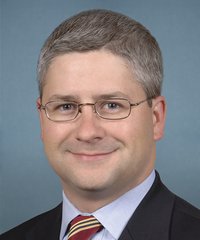
Congressman Patrick McHenry is serving his ninth term as the representative for North Carolina's 10th Congressional District which comprises all or parts of eight counties in North Carolina, from the suburbs of Charlotte on Lake Norman to the Piedmont Triad region on the Virginia border.
In the 116th Congress, Congressman McHenry was elected as the Republican Leader of the House Financial Services Committee, a committee he has served on since he was elected to Congress. In the 117th Congress, he continues to serve as Republican Leader advocating for innovative solutions that increase access to banking services and credit for American families and small businesses.
Prior to serving as the Republican Leader, Congressman McHenry served as Vice Chairman of the House Financial Services Committee, a position he was appointed to at the beginning of the 114th Congress by then Chairman Jeb Hensarling (TX-05).
One of the key components of economic investment, development, and growth is adequate infrastructure, including roads and highways. Western North Carolina's infrastructure projects have historically been underfunded by the state and federal government.
Congressman McHenry has worked to secure federal funding for infrastructure projects in the Tenth District, including $661,333 to fund construction on Highway 321, $2.4 million to help fund construction of Highway 74 Bypass, $1.3 million to complete the new Highway 16, and $800,000 to fund construction of Highway 150. In 2018, Congressman McHenry assisted the City of Hickory in obtaining a $17 million RAISE Grant, which will be used to make the city’s infrastructure more accessible to bikes and pedestrians.
Today, many rightly view broadband networks as basic critical infrastructure. Congressman McHenry has worked to bridge the “digital divide” that exists in many rural areas of our country, including Western North Carolina. He is a cosponsor of the RURAL Act of 2019, which was signed into law in 2019 as part of a government funding bill. This legislation would encourage infrastructure development by maintaining tax-exempt cooperative organizations’ access to government grants, including funding to expand rural broadband. Western North Carolina’s communities, businesses, and citizens benefit greatly from the expansion of high-quality broadband access, and Congressman McHenry will continue to fight to ensure that his constituents have access to this critical infrastructure.
North Carolina is a donor state – meaning we send more money to Washington, D.C. through federal fuel taxes than we receive back in federal funding. Congressman McHenry is fighting to increase the minimum guarantee from the federal government to North Carolina – thereby increasing the potential funding for road projects in Western North Carolina.