
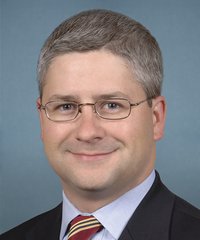
Congressman Patrick McHenry is serving his ninth term as the representative for North Carolina's 10th Congressional District which comprises all or parts of eight counties in North Carolina, from the suburbs of Charlotte on Lake Norman to the Piedmont Triad region on the Virginia border.
In the 116th Congress, Congressman McHenry was elected as the Republican Leader of the House Financial Services Committee, a committee he has served on since he was elected to Congress. In the 117th Congress, he continues to serve as Republican Leader advocating for innovative solutions that increase access to banking services and credit for American families and small businesses.
Prior to serving as the Republican Leader, Congressman McHenry served as Vice Chairman of the House Financial Services Committee, a position he was appointed to at the beginning of the 114th Congress by then Chairman Jeb Hensarling (TX-05).
Congressman McHenry is a strong supporter of law enforcement and the rule of law. He has pledged to oppose any bill, resolution, or movement to “Defund the Police.”
Congressman McHenry works closely with sheriffs and other law enforcement personnel from every county in the Tenth District, along with federal Drug Enforcement Administration (DEA) agents and State Bureau of Investigation (SBI) agents to discuss solutions to the methamphetamine and opioid addiction problem in North Carolina. The Congressman supports stiffer penalties for drug dealers and traffickers, and better management of federal grants to assist the efforts of local law enforcement to eradicate this problem. Congressman McHenry supported increased funding for enforcement efforts to combat prescription drug abuse and is a member of the Congressional Caucus to Fight Methamphetamine, which works to stop the use and production of this dangerous drug.
Congressman McHenry also supported the Substance Use-Disorder Prevention that Promotes Opioid Recovery and Treatment (SUPPORT) for Patients and Communities Act. This legislation combats our nation’s opioid problem by teaching healthcare providers about addiction medicines, increasing and strengthening our medical workforce who specialize in addiction, and streamlining the delivery of addiction medicine. President Trump signed the SUPPORT for Patients and Communities Act into law on October 24, 2018 and hailed it as the “single largest legislative package addressing a single drug crisis in history.”
The role of the judicial branch of government is to interpret the law, not create it. That responsibility belongs to democratically elected representatives who are accountable to the American people. However, too often, activist judges continue to write public policy from the bench in defiance of the Constitution and against the will of the American people.