
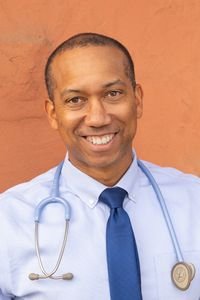
Kermit Jones was born in Michigan. Jones served in the U.S. Navy from 2005 to 2009. He earned degrees from the Georgia Institute of Technology in 1997, Duke University School of Law in 2005, and Duke University School of Medicine in 2005.
Climate change is a challenge we must rise to, and an opportunity we can’t pass up.
With the drought and fires getting worse every year, we see the devastating impacts of climate change every day in California. In order to better protect those who live in fire risk areas, I’ll sponsor legislation in Congress that would enact a federal fire insurance program for existing structures.
In my first term in office, I will sponsor legislation for a federal fire insurance plan, patterned after the federal flood insurance plan administered by FEMA. The plan will be available to residents in high and medium fire risk areas of the country, specifically Western U.S. states with higher fire risk, e.g., California, New Mexico, Colorado, Arizona, Nevada, Oregon and Washington. The plan will have the following framework:
Insured will be able to insure their homes at current local rates of fire insurance but will be able to lower premiums by taking advantage of federal economic incentives to lower their individual and community fire risk. Signing up for these incentives and performing the duties tied to them, along with proper U.S. government forest management of federal lands may reduce fire insurance premiums by up to 40%.
Insured will be allowed to use tax breaks and incentives of up to $10,000 in one year (or broken up over three years) to put toward creating 100 feet of defensible space around their homes and other measures to lower their risk of fire.
Federal government will work with state governments to ensure that local companies that work in defensive space creation will not be able to raise rates for fuel reduction more than the average of the last three years of cost to as to mitigate the risk of price gouging after program creation.
When more than 30% of residents in a community are insured under the plan and take advantage of the home hardening / defensible space tax break, the community insurance rate will decrease by an additional 10%-15%
Congressional funding for the federal insurance plan will also include 3 to 1 increased funding for the U.S. Forest Service and Bureau of Land Management fuel reduction programs to hire more staff help lower fire risk through prescribed burns, mechanical thinning and biomass production.
Training programs and MOUs between U.S. Forest Service and Calfire to create collaborative programs to better identify and assess risk of fires on federal lands.