
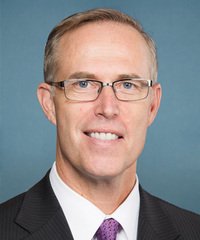
ared Huffman represents California’s 2nd Congressional District which spans the North Coast of the state, from the Golden Gate Bridge to the Oregon border, and includes Marin, Sonoma, Mendocino, Humboldt, Trinity, and Del Norte counties. He was first elected to Congress in November 2012 and currently serves on the Committee on Natural Resources, the Committee on Transportation and Infrastructure, and the Select Committee on the Climate Crisis. In the 117th Congress, he chairs the Natural Resources Subcommittee on Water, Oceans and Wildlife, with jurisdiction over federal water projects, fisheries management, coastal zone and oceans policy, and wildlife and endangered species. Jared also founded the Congressional Freethought Caucus to promote sound public policy based on reason, science and moral values, while protecting the secular character of government and championing the value of freedom of thought worldwide.
THE BUDGET:
Congress has a responsibility to help bolster our economic recovery, and the federal budget should support investments in transportation infrastructure, research and development, and education that create jobs here at home. That’s why I have supported the Democratic budget proposals that create millions of new jobs by investing in infrastructure, providing businesses with tax credits for creating jobs, supporting our schools and institutions of higher-education, and establishing a Veterans Jobs Corps. I oppose budgets that slash Medicare, hurt job creation, tank funding for education and infrastructure investments, and undermine clean water and clean air protections.
JOBS AND WORKFORCE PROTECTIONS:
Many working families – on the North Coast and throughout the nation — still feel they cannot get ahead. Wages are stagnant while the costs of prescription drugs, college and housing continue to grow. It's no wonder many people feel frustrated and left behind.
We know many of the things that can help middle class families meet these challenges: keeping health care affordable, making sure more workers are covered by overtime protections, and providing paid family leave and child care; however, those tools alone are not enough to combat the broader economic changes that are hurting working families. We also need to ensure that our trade policies support workers, and we need to do more to provide the tools people need to succeed in the 21st century global economy.
TRADE:
Trade agreements must promote strong protections for American consumers, workers, public health, and the environment.
I opposed the Trans-Pacific Partnership (TPP) which would have established a new free trade agreement involving a number of countries around the Pacific Ocean, from Mexico to Japan, and Canada to Peru. I was particularly concerned with the weak environmental standards in the agreement.
TARIFFS:
Former President Trump’s reckless trade wars threatened economic growth, hurting individual families and businesses across the country. Of course we need to confront trade abuses by China and other countries. But we must do that thoughtfully, and working with allies, rather than spontaneously invoking tariffs and declaring trade wars on Twitter. We must also be smarter about the fights we pick. The former President’s first act in this trade war was to slap 30% tariffs on all imported solar panel products – even on American-produced components. The clean energy industry is an American success story, and these tariffs will harm our clean energy economy, costing tens of thousands of American jobs. To reverse this reckless decision, I joined several colleagues in introducing the bipartisan Protecting American Solar Jobs Act.