
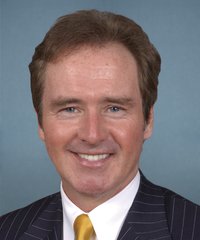
Brian Higgins is a member of the United States House of Representatives serving New York’s 26th congressional district, which includes portions of Erie and Niagara Counties.
Widely accepted as the principal architect of waterfront development in Buffalo and Western New York, Brian led the fight for a quarter-billion dollar federal relicensing settlement from the New York Power Authority that continues to finance the transformation of Buffalo's long-neglected Inner and Outer Harbor waterfront areas. In our nation’s capital, Brian is an advocate for policies important to our regional and national economies. Brian is an avowed supporter of increased funding for biomedical research – an area creating jobs throughout the Buffalo Niagara Medical Campus – and remains a strong voice for robust infrastructure investment, for “nation building here at home.”
Brian recognizes that for Western New York to reach its full potential, opportunity must extend beyond our business districts and into our neighborhoods. As a member of the House Committee on Ways and Means, Brian maintains a seat at the table during critical discussions related to tax policy, state and local aid, and affordable housing.
Brian has been a staunch defender of the Community Development Block Grant (CDBG) program, which has repeatedly been at risk of cuts and elimination. The program delivers over $25 million to Western New York cities and towns for infrastructure, housing, neighborhood improvements and programs.
Higgins wrote and introduced the Neighborhood Homes Investment Act, bipartisan legislation designed to encourage homeownership and community investment in distressed neighborhoods by providing a tax credit allocated through states to cover the gap between the cost of construction and the sales price of a home for low-to-moderate income homeowners.
Western New York’s recent revival has been made possible, in part, thanks to the federal Historic Tax Credit program, which incentivizes private sector investment in the rehabilitation and reuse of historic buildings as well as the New Markets Tax Credit, which encourages investment in economically distressed areas.