
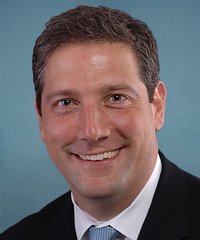
Tim Ryan is a relentless advocate for working families in Ohio's 13th District. He was first elected to the U.S. House of Representatives in 2002 and was sworn in on January 3, 2003. Successfully reelected nine times, he is now serving in his tenth term. Congressman Ryan currently serves as a member of the powerful House Appropriations Committee which controls the expenditure of money by the federal government.
Ryan serves as co-chairman of the Congressional Manufacturing Caucus and remains a leader in the fight to strengthen America's manufacturing base and reform U.S. trade policies. The House Manufacturing Caucus examines and promotes policies to help American manufacturers find trained, educated workers, continue to lead the world in developing new industrial technologies, operate on a level playing field with their foreign competitors, and obtain the capital they need to thrive. Ryan is the leading advocate in the House to impose sanctions on unfair Chinese currency manipulation.
The relationship between local law enforcement and communities of color has grown increasingly strained. Tensions in some cities have even reached a boiling point. At this critical moment, we must unite behind the common goal of keeping our communities safe for everyone. Rebuilding the trust between police and the people they have sworn to protect and serve will require an open dialogue on tough issues.
With this in mind, I believe every law enforcement officer should be equipped with a body camera, which should be on and recording during every police encounter. That’s why I support the Police CAMERA Act, which would provide resources to law enforcement agencies to begin body-worn camera pilot programs and develop protocols for their safe and effective use. Evidence suggests that police departments that employ these types of programs see a decline in complaints against police and incidents of excessive force. By focusing on officer safety, accountability, and transparency, we can begin the much-needed healing process in police departments and communities across the nation.
At the same time, we need to do everything we can to support the work of law enforcement. That means making investments in the Office of Community Oriented Policing Services (COPS) and Byrne Justice Assistance Grants (Byrne JAG), programs that give police departments access to the most innovative and effective training, equipment, strategies, and policing practices. Ensuring that officers have the best training is key to keeping them and the public safe, which is why I wrote to President Trump in the first week of his presidency asking him not to zero out these critical programs in his Fiscal Year 2018 Budget. Eliminating these much-needed grant programs would have been an enormous blow to efforts by Ohio law enforcement to fight the opioid epidemic and keep communities safe. Our brave men and women in law enforcement need more resources, which in turn leads to safer communities and less injustice.
In addition to rethinking our police practices, we must also rethink our criminal justice system. The United States has five percent of the world’s population, but 25 percent of the world’s prison population. Many of these offenders have untreated mental health and substance abuse issues. In fact, the three largest mental health providers in our nation are jails. Our federal prisons are overcrowded with 2.2 million men and women, many of whom are serving long mandatory sentences for low-level, nonviolent drug offenses. The cost of detaining a person for one year is $30,000 – more than the cost of one year at a public university. In its current form, our criminal justice system is simply unsustainable.
Fortunately, there is bipartisan consensus that it is time to reform our criminal justice system and modernize our sentencing laws. That’s why I cosponsored the Smarter Sentencing Act, which would reduce mandatory minimum drug sentences so expensive prison beds are saved for the most dangerous offenders. I also cosponsored the Sentencing Reform Act, a bill that would give courts the flexibility to reduce the mandatory minimum prison term imposed on nonviolent defendants convicted of a high-level first-time or low-level repeat drug offense. Lastly, I was proud to support the Democracy Restoration Act, legislation declaring that the right to vote cannot be denied to formerly-incarcerated U.S. citizens once they have paid their debt to society. These reforms will give more of our citizens a second chance at being a contributing member of our nation and its economy.